children of divorce - Page 7

raising children of divorce

Raising Children of Divorce Part 1- Adult Matters

Soila Sindiyo Parenting Therapist Founding Editor  The Divorce Magazine
Soila Sindiyo
Parenting Therapist
Founding Editor
The Divorce Magazine

There are loads of things children of divorce need and don’t need when going through divorce but I’ll name just three of the main ones in this post.

If parents are able to follow just these three then it’s very likely that all else will fall into place and hence any chances of long or short term negative effects of divorce on children maybe reduced.

They are not easy to follow and neither is raising children while going through the divorce process but we need to do what we can to make sure that our children’s divorce experience isn’t one that will stay with them for the rest of their lives.

This experience can be one that they are able to live through and remember it as something that happened not as something that is still going on in their adult lives.

When raising children of divorce they need to be excluded from all adult matters.  A dear friend of mine who works as a nurse in a primary school sees, first hand, the effects of divorce on children both in their behaviour and academic performance.

She has told the story of a boy who once spent most of the day in her office in tears and in self-isolation, as he waited to hear from his parents as to whether he was going to live with his mother or father.

He was only 7 years old and knew the ins and outs of the divorce process and all of the legal goings on between the parents.

Another mum explained how she was surprised when her daughter asked if “daddy had paid the money,” because she wanted to know if she will then be able to see him.

She hadn’t realised that her daughter was indeed paying great attention each time she said to her that daddy wasn’t paying her any money and so he didn’t deserve to spend time with her.

There are things that children don’t need to know.  They don’t need to be involved in adult matters.  Children of divorce need to be left to continue being children, as much as possible.  And only you as the parents can do this for them.

You are your child’s trustee and that responsibility goes a long, long way including when you are filled with resentment towards the other parent – that’s when your parenting capablities are truly tested.  Will you make the grade or are you the toxic parent?

The best gift you can give your child during and after the filing for divorce and the divorce process is over, is to get on with their other parent, for your child’s sake.

If you’re finding it hard to do, seek help, create a support system around you that can hold you up when things get rough.  It’s probably going to be a long, hard slog but I promise you,for your child’s sake, it will be worth it.

Soila


Part 2 – click here and Part 3 here 

Children of divorce
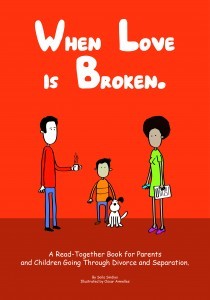
Get your copy of “When Love is Broken – A read-together Book for Parents and Children going through Divorce and Separation.”

Soila is the founder of The Divorce Magazine and creator of the online course – Helping Children Cope with Divorce

She is known for taking away the pain of trauma and loss in children, adolescents and their families and is the author of “When Love is Broken. A read-together book for children and parents going through divorce and separation.

Soila holds an MSc in Psychoanalytic Developmental Psychology from UCL (University College London), is an accredited Positive Parenting Program (Triple P) practitioner and a trained Family Mediator.

Soila is Graduate Member of the British Psychological Society.

You can contact her on 07850 85 60 66 or via email soila@thedivorcemagazine.co.uk 

Children of divorce

Raising Children of Divorce Part 2- Conflict Free Environment

Children of divorce
Soila Sindiyo
Child Trauma Therapist and Founder of The Divorce Magazine

For part 1 (Raising Children of divorce – The need to be excluded from adult matters) and part 3 (Raising Children of divorce – The need both parents).

This is part 2 Raising Children of Divorce – Conflict Free Environment – where we talk about providing children of divorce with a conflict free environment.

Let’s keep it real though.  Even in “happy” homes there will be moments and times where disagreements will happen.  There will be occasions where parents will get into a proper heated argument that the children will not like hearing.  It happens.

Let’s also remember that if there was no conflict, however subtle or understated, then you most likely may still be together.

So conflict is indeed expected at some level but three things will determine just what effect it will have on your children – the frequency of the conflict, it’s intensity as well as how it’s resolved, I’m not talking resolved with the other parent in conflict but how it’s resolved with the children or in their eyes.

The first two points are self-explanatory I would assume, but let me explain the third.

Providing your child with an opportunity to talk about what happened between daddy and mummy equates with providing them with a chance to package their anxieties and worries and hand them over to someone else to deal with.  This then allows them to carry on, as best as possible, with their lives and feel that they are being taken care off.

If you are not able to carry their emotions then find someone who will; a family member, a friend of yours or a professional.  But do, do something for them.

If they are unable to talk or discuss what is going on or what happened, then being left with all the ensuing emotions, thoughts and beliefs inside them will only aid in enhancing their insecurities, sense of fear of it happening again.  They don’t have the maturity to manage a pack of negative emotions.  You do.

The best gift you can give your child during and after the filing for divorce and the divorce process is over, is to get on with their other parent, for your child’s sake.

If you’re finding it hard to do, seek help, create a support system around you that can hold you up when things get rough.  It’s probably going to be a long, hard slog but I promise you,for your child’s sake, it will be worth it.

Soila


Raising Children of divorce
Get your copy of “When Love is Broken – A read-together Book for Parents and Children going through Divorce and Separation.”

Soila is the founder of The Divorce Magazine and creator of the online course – Helping Children Cope with Divorce

She is known for taking away the pain of trauma and loss in children, adolescents and their families and is the author of “When Love is Broken. A read-together book for children and parents going through divorce and separation.

Soila holds an MSc in Psychoanalytic Developmental Psychology from UCL (University College London), is an accredited Positive Parenting Program (Triple P) practitioner and a trained Family Mediator.

Soila is Graduate Member of the British Psychological Society.

You can contact her on 07850 85 60 66 or via email soila@thedivorcemagazine.co.uk 

Raising children of divorce

Raising Children of Divorce Part 3

Children of divorce
Soila Sindiyo
Child Trauma Therapist and Founder of The Divorce Magazine

This is the final part of a three part post.  Click here for part 1 (Raising Children of Divorce – Need to be excluded from divorce matters) and Part 2 (Children of divorce need a conflict free environment).

Finally, children of divorce need both parents, unless of course there are real issues around their safety and wellbeing, in which case, using a contact centre may be the best way forward.

The love that a child has for a parent, is truly inexplicable.  I say this because it was something that I saw over and over again when I worked as a child trauma therapist at Vicitm Support Lambeth.

There were children who came into my session room whose fathers or mothers had commited really horrific crimes against someone else or them directly but they, these children, in the safety of the therapy room, would say that they missed the parent, still loved them and wanted to see them.

They wouldn’t however say this to the other parent as they didn’t want to hurt them.  They would at times also say terrible things about the other parent to the resident parent, so as to show that they were on their side – just as children of divorce tend to do when their loyalties are split.

Young children don’t understand that their father or mother is a narcissit, not at first anyway, that will come with age, but you do and you can learn what to do when divorcing a narcissit or a sociopath.

So with this in mind, try and imagine, removing the other parent from your child’s life because you are angry, resentful and just feeling vindictive. How is your child supposed to deal with this change in circumstance or this internal vacant space left in their lives?

How are they supposed to go from loving daddy, (generally speaking) and seeing him everyday or every week to not seeing him at all?  Are you, as the mother, aware of what the repercussions of your act will be in your child’s life?  Do you truly understand the role a father plays in a child’s life?

When they turn around in later life and ask you, “Why did you keep me away from my mum/dad?” I wonder what the answer will be?

The best gift you can give your child during and after the filing for divorce and the divorce process is over, is to get on with their other parent, for your child’s sake.

If you’re finding it hard to do, seek help, create a support system around you that can hold you up when things get rough.  It’s probably going to be a long, hard slog but I promise you, for your child’s sake, it will be worth it.

Soila

Soila is the founder of The Divorce Magazine and creator of the online course – Helping Children Cope with Divorce

She is known for taking away the pain of trauma and loss in children, adolescents and their families.

Soila holds an MSc in Psychoanalytic Developmental Psychology from UCL (University College London), is an accredited Positive Parenting Program (Triple P) practitioner and a trained Family Mediator.

Soila is Graduate Member of the British Psychological Society.

You can contact her on 07850 85 60 66 or via email soila@thedivorcemagazine.co.uk 

looking after children of divorce

Children of Divorce – Why Walk in Their Shoes?

Laura Johnson
Solicitor at Davis Blank Furniss

When parents are going through divorce or relationship breakdown, they invariably seek that their children’s time is shared equally. Dividing time may feel fair to the parents but is not going to always feel fair to the children.

The best way to approach making arrangements is to consider the weekly routines and commitments for everyone involve before apportioning care. The key is to make sure it’s about quality time – no matter how long or short. This will ensure stability and will make parenting as separated parents a little easier and less stressful.

Communication and compromise are at the centre of making this work; although the parents’ relationship may not have endured, they still have a responsibility to work together to find a way of ensuring the best interests of the children. This will ensure that your children feel valued rather than them feeling like a possession to be fought over and carved up.

If a parent is able to put themselves in the shoes of their children – and consider how unsettling and disruptive it may be living between two homes – then they should be able to be more creative about the arrangements.

Equal shared care works for some families, but it does not work for all. It is better for parents to keep an open mind and be creative and flexible in order to achieve arrangements that work specifically for their family.  That may mean an unequal distribution of time, but as long as the focus is on making it secure and happy, then their relationships should continue to grow and develop.

Sometimes parents have to be brave and accept that it may be more appropriate for the children to have one main home and to spend regular and frequent time with the non-resident parent; this can be just as rewarding and beneficial for parent and child alike.

Laura’s expertise covers all aspects of Family Law and Private Client work. She provides practical advice to clients throughout their divorce proceedings. Her role also includes making wills, administering probate, setting up Personal Injury Compensation Trusts and creating Powers of Attorney.

www.dbf-law.co.uk


Supervised Visitation

Speak Up for Supervised Visitation

Women and Divorce
Wendi Schuller
Author of
The Global Guide to Divorce

Trust your gut instinct when negotiating shared care.  If supervised visitation is warranted – then speak up.

Your child’s safety is paramount, especially when there is a narcissistic parent who is focused on themselves.

An eminent psychologist told me that narcissism was the main personality disorder that needs supervised visitation.

Janice was in an acrimonious court battle over the custody of their five-year-old.  The father would attempt to get at Janice through their daughter, such as buying the five year old inappropriate clothing geared more towards the exotic dancer profession.

The judge was at wits end saying the case was more about “he said, she said” which made getting at the truth difficult. Janice insisted that there should be supervised visitation, but that was not heeded. She ran out of money midway through the proceedings and was assigned an inexperienced legal defender after her solicitor stepped down.

Janice also expressed her fear of having the girl around her father’s construction business.

Little Ellie was a victim of parental alienation and would tell her mum that dad said she was a liar. In a quiet moment when she, Ellie and the cat were cuddling, Janice said this is what safety and truth is. Feel it in your heart. When something does not feel this way, it is an untruth.

supervised visitation
Janice also expressed her fear of having the girl around her father’s construction business.

Parental alienation started to fade after Ellie learned this technique. She later told her mum that dad said something bad about her, but she knew it was not true since it did not feel right in her heart.

Ellie had a premonition of her death. She confided in an adult family friend that she would not be here much longer. Janice had bought Ellie a look-alike American Girl doll for Christmas. The daughter asked if that was so she would have something that looked like her after she was gone.

Although Ellie’s talk of death was disturbing, the mother had stopped asking about having supervised visitation. Soon after, the father accidentally ran over Ellie with a bulldozer on the construction site.

He refused to take responsibility for the girl’s fatality and told the distraught mother that Ellie “had committed suicide.”

He insisted upon an open casket funeral and demanded that the undertaker patch up the body parts.

Janice has this advice to share with others.

Be the squeaky wheel that gets results – keep demanding supervised visitation when the co-parent is a narcissist. Narcissists are so focused on themselves and projected image, that they often do not pay much attention to others in their vicinity.

Narcissistic parents parade kids around their job sites to play the good daddy/mummy role and then may lose interest in them.

Another example is of two boys who confided that they were dumped in the doctors’ lounge for hours after their father marched them around the hospital to garner accolades for being a great parent.

Not paying attention to his daughter’s whereabouts cost Ellie her life.

In other cases, the narcissistic parent’s inattention to their kids, resulted in a concussion, broken bones and stitches.

These parents were too busy being in the limelight to do adequate childcare.

Janice does not know if listening to her daughter’s premonition regarding her death would have saved her, but feels that supervised visitation would have done so. Pay attention to your intuition if something does not feel right.

CLICK HERE FOR MORE ARTICLES BY WENDI SCHULLER

ABOUT WENDI

Wendi Schuller is a nurse, hypnotherapist and is certified in Neuro-linguistic Programing (NLP).

Her most recent book is The Global Guide to Divorce and she has over 200 published articles.

She is a guest on radio programs in the US and UK. Her website is globalguidetodivorce.com.

Please go to your post editor > Post Settings > Post Formats tab below your editor to enter video URL.

Dr Phil on Children of Divorce and their Parents

I often watch and seek out videos that help in one way or other when it comes to issues around divorce and especially those around children and divorce.

Many have written on the effects of divorce on children and why children need both parents.

I have to say that if you read or watch just one thing around this topic please make it the video below by Dr Phil on children of divorce. It just really encapsulates what children of divorce need to make sure they do the best they can in their new life and chapter.

Children of divorce need as much help in coping with divorce. Many parents who are making it difficult for children to continue having a relationship with the other parent, either through parental alienation or by simply making it as difficult as possible for them to see one another, are often parenting from hurt, pain, anger and from a place of vengeance.

If this is you, realise that you may indeed be a toxic parent.

Children of divorce find themselves stuck in a situation chosen and created by parents. They are often confused, angry and lost.

The main and probably only people who can make it better for them are their parents.

If you are co-parenting with an angry ex or one who is uncooperative then sadly, it just means you’ve got more work to do in making sure your children’s fears and anxieties are contained. And if that container needs to be you then the best thing you can do is find and create your own support system that could include friends and extended family.


The children are picking up the tab for you running an emotional agenda and they will resent you for that in the long run. You may think you’re winning because you have the children and they’re clinging on to you and he’s on the outside looking in the day will come when they will look at you and say why did I have to grow up without my daddy?  I promise you this will backlash on you and you will remember the day that I said that to you if things don’t change here.

Dr Phil


Divorce Through Children’s Eyes

Women and Divorce
Wendi Schuller
Author of
The Global Guide to Divorce

Parents may feel that they are sailing through divorce, yet children can view it quite differently.

As a part-time school nurse, I have listened to many children who end up in my nurse’s office with stress induced health issues.

Here is what kids wish their parents knew:

We are not property that has to be divided equally. One youngster developed an eye twitch after his parents’ divorce.

They tried to be fair splitting assets and this carried over to shared care 50/50. The boy did not like the frequent switches to each parent’s home.

I spoke to the mother about this boy’s concern. The parents were able to negotiate that he would spend 75% at his mum’s and 25% with dad. His dad would be able to pick Aiden up at his mum’s for an activity and return him there afterwards. The twitch went away with this new arrangement and Aiden enjoyed time with each parent.

Do not march into battle over us. It may be appropriate in a Victorian novel to fight over a loved one, but not in this era. I had one student who spent all morning in my nurse’s office while his parents went to war in court over custody that day. His teacher sent this lad to me, since he was incapable of learning in the classroom. Reassure the child that his custody wishes will be taken into consideration. Keep kids out of the divorce drama and do not share details with them.

We want to know that there will be some continuity in our lives. Let the kids know that while divorce details are still being decided, the main points in their lives will remain the same. The children will attend their current schools and maintain contact with friends. They will still go to sports practices, dance classes, scouting, or whatever activities they participate in now.

We want some say in our lives. Loss of control equals ending up in my nurse’s office with headaches or stomach aches. While kids do not set boundaries or make the rules – they certainly can have some input. Let them help with family decisions, such as do we want a summer holiday, or spread treats out during the year and have a staycation? Ask what their priorities are and work on a strategy together on how to reach them.

Listen to us when we try and get your attention. Do not let a small problem turn into a big one because you are barely able to keep your head above water. I have seen a few kids develop eating disorders after parents’ divorces.

Check in with your children at least weekly to let them air their concerns.

Some do this at family meetings to discuss issues and go over the weekly schedule and upcoming events. Kids who feel lost in the shuffle may turn to the comfort of drugs and alcohol. When busy, doing parallel activities side by side with the kids still counts as spending time with them.

Please do not talk to me about the other parent or your frustrations with them. Kids know our strengths and weaknesses and do not require having them pointed out by the other parent. I just tell my son that both of his parents have made mistakes and he can see what worked and use that when he becomes a parent.

Do not make excuses about the absent parent which gets our hopes up and confuses us about reality. If a parent does not pick up the child for visitation or carries through on a promise, do not defend them. That can prolong agony or give false expectations when one parent wants to step out of the picture. You do not know what is going on in the absent parent’s heart or mind, so do not give reassurances. Instead focus on the child.

Acknowledge the child’s feelings, saying that you can see she is disappointed/frustrated. Perhaps introduce a diversion, such as suggesting she call a friend now for a pizza sleepover.

If you feel that your children are not adjusting to the divorce situation, then consider taking them to meet with a divorce coach or therapist.

CLICK HERE FOR MORE ARTICLES BY WENDI SCHULLER

ABOUT WENDI

Wendi Schuller is a nurse, hypnotherapist and is certified in Neuro-linguistic Programing (NLP).

Her most recent book is The Global Guide to Divorce and she has over 200 published articles.

She is a guest on radio programs in the US and UK. Her website is globalguidetodivorce.com.

//

Why Lying to Children of Divorce is a Time Bomb

Soila Sindiyo Child Trauma Therapist and Founder of The Divorce Magazine
Soila Sindiyo
Child Trauma Therapist and Founder of The Divorce Magazine

I recently spoke to a divorced dad friend of mine who lives in the States and whom I have known for over 20 years.

My discussion with him is what prompted this article because it was not the first time that I have come across lies we tell our children as we go through divorce.

He and his ex-wife divorced when their daughter was just turning 1 and from then on all contact with his child became a hellish journey comprised of last minute cancellations and changes in pre-arranged visitation dates and times as well as wasted journeys where he would be met with a no-show from ex-partner and child.

Well, one day he went over as planned and they were not home. It was the neighbour who informed him that the “the lady who lived there” had moved back to her country of origin which was in a very distant continent.

He had not been consulted, not been told and had no idea.

He eventually managed to track them down and in the last 10 years, has managed to see his daughter twice.

Last year, his now 14 year old daughter sent him an email asking if she could go live with him and his family. She explained that it was her mum’s suggestion as she had lost her job and home and was finding it difficult to look after her.

My friend and his current wife, were happy to have her, despite the fact that they too were and still are struggling financially.

So he replied to his daughter and told her this, adding that while they were making the necessary arrangements, her mother, his ex-partner, would need to write to the authorities concerned to inform them of the new arrangement so that the child maintenance cheques can stop.

Thing to understand here is that the State in which he lives does not mess about when it comes to child support. If you fail to pay a couple of times, they will come for you and you can explain the rest to the judge! So whether my friend liked it or not, child support was on thing he wasn’t about to play around with.

His daughter replied with the words, “What child support.  Mum told me you’ve never paid any child support.”

The truth is now beginning to unravel like a ball of wool. As is sometimes said, “today is the tomorrow you feared yesterday.”

Here is a child who will slowly, in one way or other, begin to understand that not everything her mum told her about her father is true.Divorce and the lies we tell our children

Forget about how this will affect the mother/daughter relationship and think about how this will affect the way this girl will begin to see her own life and the guilt she might feel for having resented or hated her father for so long for something he never did.

If her mother could lie about something so fundamental and so easy to prove untrue, what else could she have lied about to her daughter regarding her father?

My questions to you are the following:

What is the point of telling our children untruths about their other parent while going through a divorce?

How does that benefit them?

What is the point of alienating them from the other parent? Again, how does that benefit them? Do we not realise that one day, this child will grow up, that he/she will meet up with his/her alienated parent and the truth will come out?

Are we really that short-sighted?

Do we not realise that these children will grow and in time the truth will emerge?

Do we not understand that by lying to them, we are indeed planting a time bomb on our own relationship with them and when the “boom” happens, because it will, they, our children, will resent us for the longest time possible. Are we really that fatuous?

In my line of work, I have heard of lies much more serious and damaging than this.

As a parent, aren’t we supposed to make sure our children are alright no matter what that costs us?

Why do we lie to them about someone so significant in their life, someone whom they are part of?


Soila is the founder of The Divorce Magazine and creator of the online course – Helping Children Cope with Divorce

She is known for taking away the pain of trauma and loss in children, adolescents and their families and is the author of “When Love is Broken. A read-together book for children and parents going through divorce and separation.

Soila holds an MSc in Psychoanalytic Developmental Psychology from UCL (University College London), is an accredited Positive Parenting Program (Triple P) practitioner and a trained Family Mediator.

Soila is Graduate Member of the British Psychological Society.

You can contact her on 07850 85 60 66 or via email soila@thedivorcemagazine.co.uk 

helping children of divorce cope

Tips in Helping Children of Divorce Cope

Karla Lee Author and Founder of Voice4kids
Karla Lee
Author and Founder of Voice4kids

Why is it important to keep the BOUNDARIES set and FAMILIAR routine?

The Children have been through enough.

They need the stability more than ever now. Stick to your normal routine and boundaries. Make sure you have a good network of Family & Friends around you as well.

Tips in Helping Children of Divorce Cope

  • Stick to your normal routine (It helps them).
  • Don’t change things out of guilt.
  • If they are changing homes, try to keep them in the same School so that something is familiar to them.
  • Rules are rules. If you had house rules before the Divorce don’t change them.
  • Make sure you have Family support around the Children and yourself.
  • If your Children are finding it hard to talk to you, they may have another close relative like and Aunt, Uncle or Grandparent they can share with.
  • If they normally go to their Grandparents every Wednesday night, continue that.
  • If Dad normally took him to Soccer, try to see if Dad can continue that.
  • Remember they feel your pain, as they are also hurting.
  • Don’t assume they are ok.
  • Ask them if they would like to talk (or just be ready when they want to talk) be an open door.
  • Don’t bad mouth your Ex – it will come back to bite you later.
  • Stick to your Boundaries. Don’t go soft in guilt of the Divorce.
  • Don’t brush things under the carpet and assume all is ok. Talk to them now.
  • Put them before any new partner, they need you more right now.
  • Let their classroom teacher know what is going on, so that if their behavior changes in class the teacher can talk to you and be more understanding.
  • But most of all, love them, love them, and love them unconditionally.

Karla’s journey started in 1998 and it is her life’s mission to reach families globally to tell them there is Hope after a Divorce and that these Children can go on to having a very fulfilled life and marriage. Karla is evidence of this. 

Karla Lee has been married for 13yrs, and she has two little girls, Faith & Hope. 

Karla’s Book “Please Don’t Go!” is her Life Story. It is raw and honest, and helps Parents see a Divorce totally from the Child’s Perspective with helpful tips. For teens & parents.

“Is It My Fault?” Karla Lee illustrated (4 short stories) to help younger children 3-12yrs understand what is happening in their home, whether a Parent is leaving or a potential Stepparent in entering their home.

For more information about Karla Lee or to purchase her books go to: www.karlalee.com

Common Divorce Questions by Children of Divorce

Karla Lee Author and Founder of Voice4kids
Karla Lee
Author and Founder of Voice4kids

Author Karla Lee (Voice 4Kids) knows all to well what it feels like to go through a Divorce.

She was only 9yrs old at the time when her parents separated, and within a moment she felt her world fell apart.  For the next 17yrs Karla struggled with different emotions, like anger, bitterness, resentment and the question of “Why Me?”

As an adult, Karla has come to realise that Parents want to talk to their Children but they just didn’t know how so here’s some helpful advice from Karla on how to handle the questions that come your way.


These are common divorce questions by children of divorce and how you can answer them.


Why are you getting a divorce?

Mummy and Daddy have tried to work through things together but it hasn’t worked. This was the last thing we wanted to happen. You must know right now that this isn’t your fault.

This is Mummy and Daddy’s problem to work through, but we are here if you want to ask us anything. We understand that this is also a very sad time for you, and understand that you are also hurting. Would you like to talk to me, or ask me anything now?

(This may open the door straight away for questions your children may need answered).

Know we are here if you ever want to talk or share your feeling with us.


Aren’t you happy being together anymore?

We are finding it difficult to be together at the moment, so we are trying to work through things. We want you to know that we are still very happy and proud of you.

We will work through this as Adults, so please don’t think that it has anything to do with you. You make us both very happy, more than you could ever know.

(Try to reassure your child that this separation divorce isn’t their fault. You may have to ask them if they understand?)


Divorce Questions by children of divorce
Common divorce questions by children of divorce

Do you still love me? (Reassurance question)

More than anything in the whole wide world. We will always love you. (Showing affection at this time would help. Say a cuddle.


Will we still be a family?

We will still be a family, but there will be a few changes.  We may be doing different things at different times with you, but we are still your parents and we love you very much.

(Sometimes children fear that the parent at home may also abandon them. Reassure them again that this is not the case.


Who am I going to live with?

We will work that out, you don’t have to concern yourself with it.  We will make sure that you are happy with the arrangements and that you see us both as much as possible.

(Sometimes Kids feel like they have to work it all out themselves and take care of the new living arrangements. Let them know that as parents you are still in charge and will take of these matters. If your child is older I suggest sitting them down to include them in the discussion. You might find they feel respected and not pushed aside. It is here that you may hear how they truly feel about it all.

(There needs to be stability and security of who is still in charge).


Will you call me every day when you move away?

Yes. Lets make at time for us to chat each day right now. What time do you think? After school?

(Include them in this process.  Set a time with them there and then so that your child feels like you are making this phone calling to them a priority in your day -to -day business.)

Important Note: Don’t forget to call them; otherwise you will let them down. Children don’t forget.


Will you ever get back together?

At the moment we need to have this time apart, and we can’t promise you anything. We just want you to know we are here for you no matter what happens.

(Never make promises you can’t keep. Children have long memories).


If I stopped being naughty and fighting with my brother/sister would you have stayed together?

We did not separate because of you or your brother/sister, and it’s not because sometimes we may be upset with you. This is something between Mummy and Daddy. An adult issue.


Karla Lee

Follow Karla Lee on Twitter


Karla’s journey started in 1998 and it is her life’s mission to reach families globally to tell them there is Hope after a Divorce and that these Children can go on to having a very fulfilled life and marriage. Karla is evidence of this.

Karla Lee has been married for 13yrs, and she has two little girls, Faith & Hope.

Karla’s Book “Please Don’t Go!” is her Life Story. It is raw and honest, and helps Parents see a Divorce totally from the Child’s Perspective with helpful tips. For teens & parents.

“Is It My Fault?” Karla Lee illustrated (4 short stories) to help younger children 3-12yrs understand what is happening in their home, whether a Parent is leaving or a potential Stepparent in entering their home.

Karla Lee Books & Dolls Promo Pic


For more information about Karla Lee or to purchase her books go to: www.karlalee.com


Toxic parents

Mitigating the Effects of Toxic Parents Post-divorce

Women and Divorce
Wendi Schuller
Author of
The Global Guide to Divorce

In the majority of cases, former spouses are able to co-parent peacefully together for the good of their children.

They put aside any animosity for the well-being of their kids and set about the task of moving on in their own lives.

Yes, there are some bumps in the road, but learning how to negotiate goes a long way in smoothing out these situations.

In rare circumstances, one parent has a personality disorder in which their conscience or morality is faulty.

There are ways to counterbalance the influence of a toxic parent or toxic parents after divorce.

My older son said that the most important measure which helped him was volunteering.

My sons heard so many negatives that helping needy people and animals took the focus off them and onto how they could make the world a better place.

We took supplies to hospitals in Asia and feline medications to a cat clinic in the Cook Islands. At home my sons volunteered with animals, at a homeless shelter, and tutoring youngsters in chess.

toxic parents
Volunteering offset the message that people are not important, and I in particular.

Helping others is very rewarding and they enjoy doing so. Volunteering connects your children to others and connection is what a parent with a personality disorder lacks.

As an added bonus, being of service to others fosters a work ethic for future jobs. It also teaches kids to get along with people of different cultures, ages, and classes, which is necessary in this global economy.

Another aspect to help children not follow in a parent’s self-centeredness is by traveling and meeting folks from different cultures. They see others with their eyes and form their own impressions. This reduces prejudice, even if the other parent spouts vile opinions of others not in her ethnic group.

We went to a Muslim country soon after 9/11 and the warmth and kindness my boys received made a lasting impression. Children are less likely to be judgemental when they have enjoyed the hospitality of people in different lands, no matter what others may be saying about them.

Helping children connect to their spiritual side diminishes the effects of antagonistic remarks made by the other parent. Whether this is going to church or appreciating the beauty of nature, the children then have something outside of themselves. My son enjoys singing in the choir and my friend delights in gazing at the ocean. Whatever feels right to you is fine.

Remember to give your kids extra cuddles.

A toxic parent may not be affectionate, but rather more aloof. Reassure your kids that you will always be there for them. A dysfunctional parent may play mind games, make empty promises, and attempt to use the kids in a tug of war.

Do not get involved in these battles and get a third party to intervene if necessary.

The important thing is to be a constant presence in your kids’ lives and give unconditional love. Have clear boundaries, expectations, and consequences when these are violated. The kids know where they stand with you.

Consider having the kids check in with a children’s divorce coach to ensure that they are thriving and not just surviving.

CLICK HERE FOR MORE ARTICLES BY WENDI SCHULLER

ABOUT WENDI

Wendi Schuller is a nurse, hypnotherapist and is certified in Neuro-linguistic Programing (NLP).

Her most recent book is The Global Guide to Divorce and she has over 200 published articles.

She is a guest on radio programs in the US and UK. Her website is globalguidetodivorce.com.

Don’t forget to subscribe to our youtube channel www.thedivorcemagazine.co.uk  today

/

Divorce UK – Do Grandparents Have Rights?

Ann Corrigan
Ann Corrigan founder of Clarity Family Law

When it comes to divorce in the UK, do grandparents have rights?  If so what are they?

Having a close relationship with your grandchildren is one of the joys of growing older.

But even the closest relationship between grandparent and child can come to an abrupt end if the child’s parents get divorced and one parent decides to cut all contact with his or her in-laws.

Unfortunately, the grandparents, unless the child has been living with them for three years has no automatic right to see or have contact with their grandchildren under UK law.

This situation is one I often have to deal with and can leave grandparents and the children devastated.

The Grandparents’ Association estimates that more than 1 million children in the UK do not have contact with their grandparents.

So, is there anything the grandparents can do?

The first thing I’d say is that it’s always better to try and resolve the situation by appealing to the parent to allow you to see the children or to offer to take part in a mediation process.

A solution reached in this way is not only less expensive and quicker than a lengthy Court process, but likely to be far less disruptive for the family and especially the children involved, and cause less animosity for the future.

However, if this doesn’t work – there is another way.

Even though your rights as a grandparent are limited, you can apply for permission (or leave) to apply for a Child Arrangements Order.

Do Grandparents have Rights?
…more than 1 million children in the UK do not have contact with their grandparents

If permission is granted, you can then apply for an order. If either parent objects to this, though, you’ll have to attend a full hearing and will need expert legal representation.

During the hearing the Court will consider the following factors:

  • why the application is being made
  • how close you are to the child
  • whether there is any risk that the proposed contact could have any negative effect on the child’s wellbeing in any way.

You basically have to persuade the Court that you have a strong, ongoing and beneficial relationship with your grandchildren.

What is a Child Arrangements Order?

The Child Arrangements Order will set out whether the grandparents have been granted face-to-face visits or indirect contact, such as letters, video, text, Skype, e-mails and telephone calls.

I should say that the family Court does recognise how important it is for children to have contact with their grandparents and it is therefore not common for the Court to refuse a contact order unless there is a risk of harm to the children.

What if the parent does not obey the order?

Fortunately this doesn’t happen very often, but the Court can enforce an order if not obeyed by the child’s parents.

It’s always advisable to try to resolve any issues in an amicable way that is least disruptive to the child and to obtain legal advice at an early stage to ensure you don’t make matters worse.

When to face-to-face contact is not possible:

There are situations when the Court may only allow grandparents indirect contract and although this is obviously not ideal, it does at least offer you an opportunity to continue a relationship with your grandchildren.

In this situation, I always advise clients to try to establish a regular routine – for example getting in touch at the same time every week or month – so that the contact becomes a regular and expected part of the child’s life.

About Ann

Ann Corrigan is founder of Clarity Family Law, a specialist family law firm in Gerrards Cross, Buckinghamshire, offering discreet, expert advice on all aspects of divorce, including the division of high value assets, children disputes and issues surrounding unmarried families.

Follow Ann on Twitter – @ClarityFamily


1 5 6 7 8 9