separation - Page 43

600 result(s) found.

Compensation and Divorce
/

Personal Injury Compensation and Divorce

Kirpal-Bidmead Flint Bishop
Kirpal Bidmead Partner and Head of Family Law

How much of the compensation received by one party to a marriage or civil partnership for personal injuries they’ve suffered should be given to the other party on divorce or dissolution?

This is a question that is currently being considered by a Court in a divorce case between a former soldier severely injured whilst serving in Afghanistan and his wife.

Corporal Simon Vaughan suffered catastrophic injuries in 2008 as a result of the explosion of a roadside bomb in Helmand Province whilst he was serving with the Army and was not expected to survive.

Corporal Vaughan has been left with brain damage and is a wheelchair user who types into an electronic device in order to communicate with others. He received approximately £1.1 million compensation for his injuries from the MOD and some private insurance policies. Those funds were expected to cover the costs of his medical care and health needs for the rest of his life.

Sadly, in February 2013 his wife, Donna, left him and Simon is now living in the bungalow which was bought and adapted to his needs at great expense and reportedly only £200,000 of the compensation is now left in cash to fund his care.

The Court is hearing evidence from Donna and Simon as to what proportion of the compensation should be paid to her to help her bring up the two children of the marriage. Some reports even suggest that the bungalow will have to be sold to help fund the divorce settlement.

Many people don’t realise that compensation for injuries suffered can be and is taken into account when considering a financial settlement on divorce or dissolution of a civil partnership.

However, the ongoing needs of both parties to the separation and their children are also relevant factors when determining how much, if any, of that compensation should be paid to the uninjured spouse or partner.

It will be interesting to see how the Judge in this case deals with the competing claims and balances Simon’s considerable needs with those of Donna and the children.


Kirpal Bidmead  is a Partner and Head of Family Law at Flint Bishop.  She has almost 20 years of experience as a solicitor is recommended by The Legal 500

Kirpal Bidmead is also an accredited member of Resolution, where her specialist subjects are Advanced Financial Provision and Advocacy.

She handles cases involving complex financial issues and matters involving arrangements for the children of the family and specialises in protecting the interests of high net worth clients on a daily basis. 


children of divorce
//

Family Solicitors, their Clients and Children of Divorce

Ben Lawson
Ben Lawson
Family Law Associate with Flint Bishop

I was prompted to write this brief article after reading an interesting piece by Sue Atkins on how to help your children deal with boy band One Direction splitting up.

Whilst I care little for One Direction’s decision to separate, it did make me think about the role of a Family Solicitor instructed following a marriage or relationship breakdown, and more so the importance of sound advice when there are children involved.

Whilst we must adhere to our client’s instructions, in such an emotive area of law, we must be able to assess and advise on the impact of separation on the client’s circumstances, but also the impact on their children.

Sue’s article made me think about how fragile a child’s emotions can be and how important it is to make sure they do not lose trust in their parents.

I’ve lost count of the amount of times I’ve heard clients berate their ex in the ‘heat of the moment’ or shortly after separation, when emotions are still high and the effects of the relationship breakdown are still being felt.

However, this makes the role of a Family Solicitor crucial, not only for our clients, but for the children.

As a member of Resolution (an organisation committed to a constructive, non-confrontational approach to family law matters), I subscribe to the Code of Guidance, which amongst other things, states that children matters should be kept separate from divorce/relationship breakdown and financial matters.

siblings and divorce
Our role as Family Solicitors is crucial, not only for our clients, but for the children.

This is hugely important, but we must bear in mind that our advice in relation to how a client should deal with the divorce or relationship breakdown, or what a fair financial settlement is, will inevitably impact the children.

For example, if a parent wishes to deal with separation in a bullying or confrontational way, this will obviously cause further tension between parents which may spill out in front of the children in an argument.

Will the child be affected by seeing their parents arguing; or hearing them blame each other for where they are or who caused the relationship to breakdown?

Finding an amicable and fair way through the myriad of issues created when parents separate is not easy but it is essential.

If, as Family Solicitors, we are not advising our clients to try and maintain at the very least a working parental relationship, the impact on the children may be felt both in the immediate aftermath of separation and throughout their lives; at birthday parties, school assemblies and graduations.

What will the impact be on a child if only one of their parents attends? Will this cause a child to lose some of their respect and trust for one or both of their parents? More importantly, is it a risk worth taking?

I am sure that you will  agree that it is not a risk worth taking. For that reason, amongst others, it is incredibly important that we are able to offer honest and practical advice to clients, giving consideration not only to what our client wants, but also pointing out that what they decide will inevitably impact on their children.

The consequences of separation and how this is dealt with, however unintended, can have detrimental impacts on children ranging from low self-esteem, parental mistrust or alienation.

As a Family Solicitor, the impact on the children must be considered when giving legal advice.

The best advice that I can offer is to take a step back. We have all been guilty of making a rash decision when angry or annoyed and often regret it shortly after.

As a Family Solicitor, it is important to maintain a calm approach and look to resolve the matter without getting your client embroiled in arguments or issues, which can be avoided. Unfortunately, there may be no way of undoing the damage caused to a child’s relationship with their parent if you do not maintain such an approach.

If you have any further questions or wish to discuss anything in this article, please do not hesitate to contact me on 01332 226185.

Ben Lawson is a  Family Law Associate Solicitor with Flint Bishop and chair of the Derby Junior Lawyers and an active member of the Derby and District Law Society Social Committee. 

He is also a Resolution member and mentor students studying law at the University of Derby.

In 2015 Ben was nominated for ‘Family Law Young Solicitor of the Year’.

Children of divorce - Providing a Caring Environment

Children of Divorce – Providing a Caring Environment

Soila Sindiyo Child Trauma Therapist Founder of The Divorce Magazine
Soila Sindiyo
Founder of The Divorce Magazine


There is little else more difficult than providing a caring environment for your children while going through the divorce process yourself.

It’s easy from time to time to slip and behave in a way that is hurtful to them at that moment and when this happens, guilt is the strong emotion that swiftly ensues.

I’ve put together a short list of what you could keep in mind when going through the divorce process as well as for your life after divorce so as to make sure the children are all right:

Check list for Children of Divorce – Providing a Caring Environment

  • Unless there are major issues of concern in terms of safety, do help your child keep in regular contact with the other parent. There are several ways that this can be done;g. by phone, Skype, letter, audio and videotapes, email, etc.
  • Keep predictable schedules, as this helps create a sense of security for your child. Just as it’s important for you to know what is happening in your own life from one day to the next, so it is for your child.
  • When you start a new relationship, avoid introducing your child to him/her too soon. Also avoid exposing your child to your world of dating.
  • Avoid any arguments during exchanges and transitions, as this will only create a sense of anxiety in your child, especially if this often happens. Try to imagine the amount of anxiety your child has to endure, knowing that you both will be coming face to face soon. Understand that it also takes a while for your child’s anxiety levels to come down again. Make transitions as quick and as smooth as possible.
  • Despite how you feel about the other parent, do help your child create and nurture a relationship with her other parent. For instance, help her choose a gift for Fathers’ Day or Mothers’ Day as well as birthdays, and remind them to call Daddy/M
  • During transitions and exchanges, you may find that your child wants to carry something from one home to another, e.g. a favourite toy, book or photos. This is very normal, and creates a sense of continuation for them. One divorced couple I know, although not generally on good terms, had a routine of starting to read a story in one home and finishing it in the other to provide continuity.
  • dating after divorce
    Providing a Caring Environment – Avoid introducing your child to your world of dating.

    I can never say this enough – avoid involving your child in adult matters. These may include detailed reasons for why the divorce happened, financial problems and how Mummy cheated on Daddy with “Uncle Peter” last summer or vice versa with “Auntie Sophie”.

  • As far as possible, do try to create similar routines in both homes for such daily and routine activities as mealtimes, bedtimes and homework times.
  • Handle rules and discipline in similar ways, as this gives your child a sense of where the boundaries lie and how far they can push them. They should soon realise that they cannot play one parent off against the other. My daughter once asked me to buy her something from the supermarket which she is usually not allowed to have. When I declined, she very politely said, “Don’t worry, M I’ll ask Daddy. He’ll get it for me.” Needless to say, I “reported” this conversation back to her father and she was immediately informed, “it doesn’t work like that here.”
  • Just as you help maintain contact with your child’s other parent, remember she also has relationships with members of her extended family, such as grandparents, cousins and step-parents, so do help support these relationships too so that your child doesn’t suffer any unnecessary relationship loss
  • For the sake of your child’s development and happiness, be as flexible as possible with your schedules so that she does not miss out on any special family occasions. Allowing children of divorced parents to attend such events only enhances their sense of identity, wellbeing and relationships with extended family members.
  • When travelling abroad or away from home for a prolonged period of time, do remember to provide the other parent with your travel itinerary and any other information they may need, regarding your child’s holiday away. Thank goodness for Skype! When my daughters are away, I not only get to speak with them, but I get to see them too, and them me. It’s a super communication tool.
  • I know this isn’t always easy, but do try to keep communications with your ex-partner as civil and respectful as possible. If this is not possible, do use other means of communicating so that your child is not exposed to any conflict between the two of you. One lady I know asked a friend of hers to read all emails from her ex-partner. This friend would then relate back what the email said, omitting anything rude or inflammatory, that would upset her friend.

Soila is the founder of The Divorce Magazine and creator of the online course – Helping Children Cope with Divorce

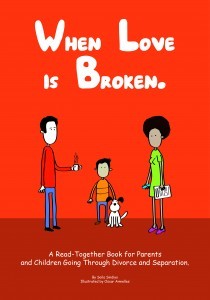
She is known for taking away the pain of trauma and loss in children, adolescents and their families and is the author of “When Love is Broken. A read-together book for children and parents going through divorce and separation.

Soila holds an MSc in Psychoanalytic Developmental Psychology from UCL (University College London), is an accredited Positive Parenting Program (Triple P) practitioner and a trained Family Mediator.

Soila is Graduate Member of the British Psychological Society.

You can contact her on 07850 85 60 66 or via email soila@thedivorcemagazine.co.uk 


Government Promise Domestic Violence Legislation Reform

Kerry Smith
Kerry Smith
Head of Family at
K J Smith Solicitors

Did you know that in a recent survey of 2,000 people, just one out of every five of the respondents believed that it was easy to spot domestic violence?

Less than one third of them believed that domestic violence could happen between former partners.

Domestic violence is, generally, considered to be physical or verbal abuse. However, psychological and financial abuse can also occur.

The latter two are dreadfully difficult to spot, and even harder to prove. This means that many people who commit that type of domestic violence are actually getting away with it.

The problem is many people do not recognise certain situations as domestic abuse.

For example, less than half of the respondents believed that keeping a tab on the spending of a partner is abuse. This means that many people could be carrying out domestic abuse, even if they are not aware of it.

That being said, the Crown Prosecution Service has put a lot of effort into ensuring that those who commit domestic abuse are punished for their crimes.

In fact, in 2014, over 107,000 people, the vast majority of them men were prosecuted for domestic abuse-related crimes. This is a far higher number than ever before.

Michael Gove, the justice secretary, pledged to reform domestic violence legislation. At the moment, he believes that it is far too easy to reoffend. He also believes that the length of time that a trial takes from start to finish is a form of abuse in itself, as some cases take a couple of years to get to trial.

Gillian Guy, currently working for Citizens Advice, believes that it was a good sign that the government are starting to tackle domestic violence properly, or, at least, entertain the notion of making improvements to the law.

She believes that the reforms that the government is proposing is likely to reduce the amount of stress it takes for a victim to get the help that they need, either on a legal basis, or on a basis where they can be helped psychologically and ensured that it is not their fault.

She also believes that reforms in legislation may have an impact on the recognition of abuse. As mentioned previously, many people do not realise that they are a victim of domestic violence and are less likely to report it.

New legislation will also aim to make coercive control illegal and ensure that those who try to control their partners, even after a separation, will feel the full force of the law.

Sadly, at the moment, there is still very little being done when it comes to legal aid.

As you may well know, a person can only apply for legal aid in domestic violence cases if they have evidence of domestic violence in the past two years. Sadly, many victims do not have the evidence that is required and, therefore, people are not being punished for their crimes.

More articles by Kerry Smith

About Kerry Smith

Kerry Smith is the head of family law at K J Smith Solicitors, a specialist family law firm who deal with a wide range of issues including divorce, domestic violence, civil partnerships and prenuptial agreements.

High Conflict Divorce – How to Protect your Children

Children of divorce
Soila Sindiyo
 Founder of The Divorce Magazine and Child Trauma Therapist

I think most of us will agree that conflict, arguments, disagreements or whatever you want to call them, are indeed part of “normal” life in a home, however, conflict becomes an issue when children are exposed to it on a regular basis and where it involves both verbal abuse and physical violence.

One line I always recall hearing during my training in working with children of trauma is:

A child old enough to laugh, is old enough to experience trauma.

So for those parents who think a child is too young to understand what is happening you maybe seeking to protect yourselves, rather than the child.

Is it possible that it’s easier to think this way than actually deal with the issues at hand?

Keep in mind two things:

  • You are not your child’s only influence so you’d better be the best
  • A child who is exposed to violence changes who they are

If you’re engaged in a high conflict divorce then here are some things you could do in the hope of protecting your children:

  •  Only communicate through a third party if necessary.  One lady I heard off, got someone to read through emails from her ex.  This reader person would then relate back to her what had been requested in his mail omitting any unnecessary points that had been raised only for point scoring purposes.
  • There are, fortunately, a million ways to communicate nowadays, email, text, whatsapp, mediation, solicitors (andeffects of divorce on childrenno they are not all bad), letters and the list continues.  If you don’t want to see one another, you really don’t have to.
  • Just don’t slag your ex in front of the children, totally unnecessary.  No one gains, not even you. The children might listen to you now and agree with you but in later years, it will come back to haunt you.  Trust me.
  • Get a mutual/public place to meet for the transitions between homes.  If the children are old enough, school’s always a good place.
  • Get you own adult sounding board.  Your children don’t need to hear, know or be part of your arguments.
  • Don’t involve your children in adult issues.  You know what those issues are but your children don’t need to.  Protect their innocence as much and for as long as you can.

If in doubt do speak with someone, your children will be very grateful for that, if not now, later.


Soila is the founder of The Divorce Magazine and creator of the online course – Helping Children Cope with Divorce

She is known for taking away the pain of trauma and loss in children, adolescents and their families and is the author of “When Love is Broken. A read-together book for children and parents going through divorce and separation.

Soila holds an MSc in Psychoanalytic Developmental Psychology from UCL (University College London), is an accredited Positive Parenting Program (Triple P) practitioner and a trained Family Mediator

finding hidden assets

Finding Hidden Assets in High Value Divorce Cases

Frank Morey is CEO of Virtus Risk Management

Divorce can a difficult and distressing time and for everyone involved.

One of the main aims is ensuring that each party receives a fair settlement, and that the same standard of living is maintained by all after separation.

In a high net worth divorce however, it is likely that there will be complex financial affairs, multiple businesses, investments, property, shares and other liquid and fixed assets.

It is a common scenario where one party has limited financial involvement in the marriage and has limited knowledge of what the marital assets are. This may provoke a spouse to misrepresent their financial situation in order to preserve their wealth, and may even be tempted to hide their assets.

A spouse hiding or understating assets can have significant effect on the other party as it could affect the distribution of wealth, alimony and child support awarded by the court.  However this does not mean it is uncommon.

In most high value divorces, there is an international element and the use of offshore structures to hide property, shareholdings, trusts and bank is a frequent occurrence in the court room.

Other assets may be in the form of cash, real estate, vehicles, stocks, bonds, valuable art, jewellery and antiques, all of which may be in several different countries, with different banks or companies.

finding hidden assets
Finding hidden assets is the work of an investigative firm.

Taking this into account, it’s important to call upon experienced advisors during this process in order to locate these assets and ensure a fairer hearing and judgement for the other party.

One of the most effective solutions would be to retain an experienced investigative firm as they have experience in thoroughly reviewing public records and can connect the dots between corporate affiliations and structures, analyse tax havens and conduct beneficial ownership checks.

Often during a high value divorce, an asset search will need to be worldwide as a simple search in the United Kingdom will yield limited results.

A good divorce asset investigation should begin as early as possible, ideally once divorce proceedings have begun and there has been an initial disclosure on the Form E petition.

Both the parties are required to submit a Form E that summarises their financial situation – a declaration of all assets and incomes, details of income from all sources and possible expenses post-divorce, capital needs in the future to support themselves and children (if applicable), etc.

Upon review of this document each party should have a clear idea of any disparities and if assets are attempted to be hidden. Once this has been established, an investigative plan can be drawn up.

Using the Form E as the benchmark, the investigative team will examine the document to evaluate possible lines of enquiry. The investigative firm will conduct its own independent research by gathering data and making a comparison to discover any non-disclosure issues.

The process should look to identify an investigative plan by identifying any jurisdictions in which the partner has conducted business and where they have spent significant time. This should give the investigative team a map on which to base investigations and start their searches.

From then on they will work closely with the spouse and their legal team to structure the way the assets are introduced into the case and negotiate non-disclosure issues.

It is important that if you have concerns about hidden assets that you seek professional advice. Consider making contact with an investigative firm that have experience in tracing and locating hidden assets.

Locating assets in a divorce case is a time consuming process, but it can produce excellent results particularly if there is an international element. In my experience of working in this field on high level asset investigations, there is almost always an asset hidden.

Frank Morey is CEO of Virtus Risk Management and an experienced security risk management advisor with expertise in helping HNW individuals understand their exposure to risk and offering guidance on managing these risks effectively.

For the past six years, he has focused on better serving the security needs of the high net worth community through innovative service design and has developed a diverse base of expertise within various security disciplines that he integrates to deliver a holistic approach to security and risk

Frank has previously held senior management positions at Banham Security, acting as lead security advisor for their HNW client base and has managed a variety of security projects from planning through to implementation.

Prior to his career in the security industry, Frank served as a Royal Marine with 45 Commando where he was deployed on operational tours of Afghanistan, Iraq and Northern Ireland. During this time he developed a comprehensive knowledge of global security operations in austere environments, high professional standards and a strong sense of integrity and confidentiality.

Follow Virtus Risk Management on Twitter


where to get divorce papers from when dealing with divorce
/

Over-the-counter divorces? They’re not such a bad thing, says Keystone’s family lawyer Zoe Bloom

Family Lawyer Zoe Bloom
Zoe Bloom – Family Lawyer with Keystone Law

In the latest bid to shake up divorce law, thousands of cases are set to be removed from the courts with the introduction of new divorce centres across England and Wales.

But is the initiative ultimately an attack on marriage? Or should it be applauded? Keystone’s Zoe Bloom shares her views.

As of next month, the vast majority of divorces processed in both England and Wales will be taken out of the courts and dealt with in one of eleven regional centres located across both countries.

Admin staff will deal with all paperwork, rather than judges, with the aim of producing faster and cheaper solutions to marriage breakdown.

The accepted reasons for filing for divorce in an English court will remain exactly as they are – with unreasonable behaviour, adultery, desertion, 5 years separation or (agreeing) couples having lived apart for a minimum of two years.

However, it is the way in which the administrative side of things is handled that will change dramatically. Instead of senior judges being forced to spend time dealing with paperwork, a number of capable yet more junior staff will be dedicated to this part of the process.

Whilst the likes of Ann Widdecombe have condemned the move, suggesting that “it makes a nonsense of marriage”[1], making a divorce as easy as “discarding an old carrier bag”[2], others claim that the idea is merely a consequence of the changing needs of today’s client.

When I first meet with people considering a divorce it is obvious that they have already spent years considering the right path for them personally and their children. It is then, a huge decision to contact me to discuss their future.

Over-the-counter divorces
It takes, on average, 3 months before instructions are formalised. Are over-the-counter divorces a solution?

It then takes, on average, 3 months before instructions are formalised.

By that time, all clients want to achieve is the divorce and separation in terms of finances and arrangements for children. Having taken the time to make the decision, the delays which are imposed by negotiations and the court are an endless source of frustration.

Anything which seeks to streamline the process and which takes that frustration away from people, who are already in a difficult position, must be welcomed and given the chance to succeed.

The evidence from those of us dealing with divorce every day is that nobody enters it lightly.

These process changes do not alter the grounds for divorce and there will still be a level of skill, experience and training required to process the papers.

If they work, the changes can only help clients going through an already difficult time, and release court and judge time, to deal with the more complicated issues resultant from separation.

[1] http://www.telegraph.co.uk/women/sex/divorce/11691060/Why-quickie-divorces-are-a-good-idea.html

[2] Ibid

Zoe is a family lawyer with Keystone Law who specialises in advising mid to high net worth individuals on the financial implications of divorce and separation. She has particular experience in renegotiating financial settlements and challenging previous consent orders, separation agreements and pre or ante nuptial agreements.

As a trained and active collaborative lawyer, Zoe is well-placed to guide clients on the best choice of route to a successful conclusion of their matter, whether this is litigation or settlement.

Zoe is a member of Resolution and has been quoted in the national press in respect of pre-nuptial agreements.

Zoe has a background in private client and tax affairs.

how to get a divorce

Divorce and Pre-Divorce Strategies

Women and Divorce
Wendi Schuller
Author of
The Global Guide to Divorce

What is done during separation may not hold up for divorce proceedings.

Get everything in writing even when happily married, since people can change their minds or show their true colours at a later date.  This is particularly important if one’s parents are part of financial investments.

Kate married kind and thoughtful Edmund. Her parents gave her half of the price for their new home to use as their down payment. Edmund readily acknowledged that the parents owned half of the house. The mistake was not having the parents pay the financial institution directly and having their names put on the deed.

Years later Edmund became condescending and thought they ought to live as if in a permanent medieval festival.

He started dressing the part and eschewing modern conveniences. They parted ways and Edmund signed a separation agreement with one point admitting he owned twenty five percent of the home.

When it came time for a divorce, the separation agreement was not binding and Kate was forced to buy him out of his perceived fifty percent share, since there was no official record of the parental contribution.

She had opened a store and had to compensate Edmund for this enterprise as well.

pre-divorce strategies
Years later Edmund thought they ought to live as if in a permanent medieval festival.

Kate advises having a clean break and making sure that everything signed is final and one spouse cannot come back at a later date to try and get money out of the other one.

The one thing that made her divorce easier is that the children were in their early twenties and custody and co-parenting were not in the picture. She stated that their relationship with their father did not involve her.

Edmund wanted Kate to pay for the divorce, since she had initiated it.

In this situation, try to compromise with an angry spouse.  She obtained a fixed price from her solicitor for an uncontested divorce and got Edmund to go along and pay for half.

Kate felt Edmund turned into someone quite nasty and the divorce was a relief, even though she struggled financially.

Sometimes people change and therapy is effective when someone is willing to work on themselves and the marriage. Edmund claimed everything was Kate’s fault and she was glad to escape this situation.

Kate did not realize how stressed and burdened she was until her staff and customers commented how radiant she had become. She jokes that she feels so much lighter since she lost two hundred pounds (Edmund).

What kept Kate’s sanity was having the routine and distraction of her store. She advises even in tough times, having a focus on something else (like her business) helps one to get through divorce and move on. Having a job and promoting her business kept her mind and time occupied so she did not dwell on the past.

Accept what you cannot change (divorce settlement) and get on with life. She has written a book on quilting, does an online program and invents quilting patterns. Teaching classes has expanded her business and she picks fun places, such as an upcoming two day course she will be presenting in Germany.

Reframe how you perceive a situation. Is it the end or an exciting new beginning? Your choice.

CLICK HERE FOR MORE ARTICLES BY WENDI SCHULLER

ABOUT WENDI

Wendi Schuller is a nurse, hypnotherapist and is certified in Neuro-linguistic Programing (NLP).

Her most recent book is The Global Guide to Divorce and she has over 200 published articles.

She is a guest on radio programs in the US and UK. Her website is globalguidetodivorce.com.

fathers are important too

Fathers are Important too!

Soila Sindiyo Parenting Therapist Founding Editor The Divorce Magazine
Soila Sindiyo
Parenting Therapist
Founding Editor
The Divorce Magazine

I have been wondering what to write now that father’s day is soon upon us here in the UK – a tricky time for divorced parents.

I wanted to write something that kindly said, “Helping children cope with divorce means giving them the gift of you two getting on as much as possible.”

I wanted to write something that pleaded, “Please don’t interrupt the relationship between your child and his/her father,” it’s not yours to disrupt because you no longer get on.

I am not talking about those father’s who have been abusive to their children because it is true, better to have no father (or mother for that matter) than an abusive one.

I wanted to write something that will put across some research that has been conducted over the years regarding children and their fathers and just how important they are to your child’s social, mental and emotional development.

I wanted to write something that will talk directly to the fathers and say, “Please don’t lose touch with your children.  They need you so much. They need you now more than ever because the world as they knew it has changed since the divorce or separation. By keeping in touch you are helping children cope with divorce in a way no one else can but you.”

Fight for them and keep fighting because they need you.  Don’t let your child become part of the statistics of children whose fathers disappeared following divorce or separation.

Finally, I wanted to write something that will say, fathers are important too – to their children – so this father’s day, help your child do something special for his/her father. Draw a card, make that phone call, or both, buy him something and have your child give it to him.

If it’s your weekend, your time with the children, how about you just step back, if only for a couple of hours and allow for them to have that day together – for your child’s sake, for your child’s well being.

Fathers are important too – very important indeed.

About Soila

Soila is the founder of The Divorce Magazine and creator of the online course – Helping Children Cope with Divorce

She is known for taking away the pain of trauma and loss in children, adolescents and their families and is the creator of the online course – Parenting after Separation

Soila holds an MSc in Psychoanalytic Developmental Psychology from UCL (University College London), is an accredited Positive Parenting Program (Triple P) practitioner and a trained Family Mediator.

Soila is Graduate Member of the British Psychological Society.

You can contact her on 07850 85 60 66 or via email soila@thedivorcemagazine.co.uk 

raising children of divorce

Raising Children of Divorce Part 1- Adult Matters

Soila Sindiyo Parenting Therapist Founding Editor  The Divorce Magazine
Soila Sindiyo
Parenting Therapist
Founding Editor
The Divorce Magazine

There are loads of things children of divorce need and don’t need when going through divorce but I’ll name just three of the main ones in this post.

If parents are able to follow just these three then it’s very likely that all else will fall into place and hence any chances of long or short term negative effects of divorce on children maybe reduced.

They are not easy to follow and neither is raising children while going through the divorce process but we need to do what we can to make sure that our children’s divorce experience isn’t one that will stay with them for the rest of their lives.

This experience can be one that they are able to live through and remember it as something that happened not as something that is still going on in their adult lives.

When raising children of divorce they need to be excluded from all adult matters.  A dear friend of mine who works as a nurse in a primary school sees, first hand, the effects of divorce on children both in their behaviour and academic performance.

She has told the story of a boy who once spent most of the day in her office in tears and in self-isolation, as he waited to hear from his parents as to whether he was going to live with his mother or father.

He was only 7 years old and knew the ins and outs of the divorce process and all of the legal goings on between the parents.

Another mum explained how she was surprised when her daughter asked if “daddy had paid the money,” because she wanted to know if she will then be able to see him.

She hadn’t realised that her daughter was indeed paying great attention each time she said to her that daddy wasn’t paying her any money and so he didn’t deserve to spend time with her.

There are things that children don’t need to know.  They don’t need to be involved in adult matters.  Children of divorce need to be left to continue being children, as much as possible.  And only you as the parents can do this for them.

You are your child’s trustee and that responsibility goes a long, long way including when you are filled with resentment towards the other parent – that’s when your parenting capablities are truly tested.  Will you make the grade or are you the toxic parent?

The best gift you can give your child during and after the filing for divorce and the divorce process is over, is to get on with their other parent, for your child’s sake.

If you’re finding it hard to do, seek help, create a support system around you that can hold you up when things get rough.  It’s probably going to be a long, hard slog but I promise you,for your child’s sake, it will be worth it.

Soila


Part 2 – click here and Part 3 here 

Children of divorce
Get your copy of “When Love is Broken – A read-together Book for Parents and Children going through Divorce and Separation.”

Soila is the founder of The Divorce Magazine and creator of the online course – Helping Children Cope with Divorce

She is known for taking away the pain of trauma and loss in children, adolescents and their families and is the author of “When Love is Broken. A read-together book for children and parents going through divorce and separation.

Soila holds an MSc in Psychoanalytic Developmental Psychology from UCL (University College London), is an accredited Positive Parenting Program (Triple P) practitioner and a trained Family Mediator.

Soila is Graduate Member of the British Psychological Society.

You can contact her on 07850 85 60 66 or via email soila@thedivorcemagazine.co.uk 

Children of divorce

Raising Children of Divorce Part 2- Conflict Free Environment

Children of divorce
Soila Sindiyo
Child Trauma Therapist and Founder of The Divorce Magazine

For part 1 (Raising Children of divorce – The need to be excluded from adult matters) and part 3 (Raising Children of divorce – The need both parents).

This is part 2 Raising Children of Divorce – Conflict Free Environment – where we talk about providing children of divorce with a conflict free environment.

Let’s keep it real though.  Even in “happy” homes there will be moments and times where disagreements will happen.  There will be occasions where parents will get into a proper heated argument that the children will not like hearing.  It happens.

Let’s also remember that if there was no conflict, however subtle or understated, then you most likely may still be together.

So conflict is indeed expected at some level but three things will determine just what effect it will have on your children – the frequency of the conflict, it’s intensity as well as how it’s resolved, I’m not talking resolved with the other parent in conflict but how it’s resolved with the children or in their eyes.

The first two points are self-explanatory I would assume, but let me explain the third.

Providing your child with an opportunity to talk about what happened between daddy and mummy equates with providing them with a chance to package their anxieties and worries and hand them over to someone else to deal with.  This then allows them to carry on, as best as possible, with their lives and feel that they are being taken care off.

If you are not able to carry their emotions then find someone who will; a family member, a friend of yours or a professional.  But do, do something for them.

If they are unable to talk or discuss what is going on or what happened, then being left with all the ensuing emotions, thoughts and beliefs inside them will only aid in enhancing their insecurities, sense of fear of it happening again.  They don’t have the maturity to manage a pack of negative emotions.  You do.

The best gift you can give your child during and after the filing for divorce and the divorce process is over, is to get on with their other parent, for your child’s sake.

If you’re finding it hard to do, seek help, create a support system around you that can hold you up when things get rough.  It’s probably going to be a long, hard slog but I promise you,for your child’s sake, it will be worth it.

Soila


Raising Children of divorce
Get your copy of “When Love is Broken – A read-together Book for Parents and Children going through Divorce and Separation.”

Soila is the founder of The Divorce Magazine and creator of the online course – Helping Children Cope with Divorce

She is known for taking away the pain of trauma and loss in children, adolescents and their families and is the author of “When Love is Broken. A read-together book for children and parents going through divorce and separation.

Soila holds an MSc in Psychoanalytic Developmental Psychology from UCL (University College London), is an accredited Positive Parenting Program (Triple P) practitioner and a trained Family Mediator.

Soila is Graduate Member of the British Psychological Society.

You can contact her on 07850 85 60 66 or via email soila@thedivorcemagazine.co.uk 

Raising children of divorce

Raising Children of Divorce Part 3

Children of divorce
Soila Sindiyo
Child Trauma Therapist and Founder of The Divorce Magazine

This is the final part of a three part post.  Click here for part 1 (Raising Children of Divorce – Need to be excluded from divorce matters) and Part 2 (Children of divorce need a conflict free environment).

Finally, children of divorce need both parents, unless of course there are real issues around their safety and wellbeing, in which case, using a contact centre may be the best way forward.

The love that a child has for a parent, is truly inexplicable.  I say this because it was something that I saw over and over again when I worked as a child trauma therapist at Vicitm Support Lambeth.

There were children who came into my session room whose fathers or mothers had commited really horrific crimes against someone else or them directly but they, these children, in the safety of the therapy room, would say that they missed the parent, still loved them and wanted to see them.

They wouldn’t however say this to the other parent as they didn’t want to hurt them.  They would at times also say terrible things about the other parent to the resident parent, so as to show that they were on their side – just as children of divorce tend to do when their loyalties are split.

Young children don’t understand that their father or mother is a narcissit, not at first anyway, that will come with age, but you do and you can learn what to do when divorcing a narcissit or a sociopath.

So with this in mind, try and imagine, removing the other parent from your child’s life because you are angry, resentful and just feeling vindictive. How is your child supposed to deal with this change in circumstance or this internal vacant space left in their lives?

How are they supposed to go from loving daddy, (generally speaking) and seeing him everyday or every week to not seeing him at all?  Are you, as the mother, aware of what the repercussions of your act will be in your child’s life?  Do you truly understand the role a father plays in a child’s life?

When they turn around in later life and ask you, “Why did you keep me away from my mum/dad?” I wonder what the answer will be?

The best gift you can give your child during and after the filing for divorce and the divorce process is over, is to get on with their other parent, for your child’s sake.

If you’re finding it hard to do, seek help, create a support system around you that can hold you up when things get rough.  It’s probably going to be a long, hard slog but I promise you, for your child’s sake, it will be worth it.

Soila

Soila is the founder of The Divorce Magazine and creator of the online course – Helping Children Cope with Divorce

She is known for taking away the pain of trauma and loss in children, adolescents and their families.

Soila holds an MSc in Psychoanalytic Developmental Psychology from UCL (University College London), is an accredited Positive Parenting Program (Triple P) practitioner and a trained Family Mediator.

Soila is Graduate Member of the British Psychological Society.

You can contact her on 07850 85 60 66 or via email soila@thedivorcemagazine.co.uk 

1 … 41 42 43 44 45 … 50