soila - Page 5

93 result(s) found.

Children of divorce - Providing a Caring Environment

Children of Divorce – Providing a Caring Environment

Soila Sindiyo Child Trauma Therapist Founder of The Divorce Magazine
Soila Sindiyo
Founder of The Divorce Magazine


There is little else more difficult than providing a caring environment for your children while going through the divorce process yourself.

It’s easy from time to time to slip and behave in a way that is hurtful to them at that moment and when this happens, guilt is the strong emotion that swiftly ensues.

I’ve put together a short list of what you could keep in mind when going through the divorce process as well as for your life after divorce so as to make sure the children are all right:

Check list for Children of Divorce – Providing a Caring Environment

  • Unless there are major issues of concern in terms of safety, do help your child keep in regular contact with the other parent. There are several ways that this can be done;g. by phone, Skype, letter, audio and videotapes, email, etc.
  • Keep predictable schedules, as this helps create a sense of security for your child. Just as it’s important for you to know what is happening in your own life from one day to the next, so it is for your child.
  • When you start a new relationship, avoid introducing your child to him/her too soon. Also avoid exposing your child to your world of dating.
  • Avoid any arguments during exchanges and transitions, as this will only create a sense of anxiety in your child, especially if this often happens. Try to imagine the amount of anxiety your child has to endure, knowing that you both will be coming face to face soon. Understand that it also takes a while for your child’s anxiety levels to come down again. Make transitions as quick and as smooth as possible.
  • Despite how you feel about the other parent, do help your child create and nurture a relationship with her other parent. For instance, help her choose a gift for Fathers’ Day or Mothers’ Day as well as birthdays, and remind them to call Daddy/M
  • During transitions and exchanges, you may find that your child wants to carry something from one home to another, e.g. a favourite toy, book or photos. This is very normal, and creates a sense of continuation for them. One divorced couple I know, although not generally on good terms, had a routine of starting to read a story in one home and finishing it in the other to provide continuity.
  • dating after divorce
    Providing a Caring Environment – Avoid introducing your child to your world of dating.

    I can never say this enough – avoid involving your child in adult matters. These may include detailed reasons for why the divorce happened, financial problems and how Mummy cheated on Daddy with “Uncle Peter” last summer or vice versa with “Auntie Sophie”.

  • As far as possible, do try to create similar routines in both homes for such daily and routine activities as mealtimes, bedtimes and homework times.
  • Handle rules and discipline in similar ways, as this gives your child a sense of where the boundaries lie and how far they can push them. They should soon realise that they cannot play one parent off against the other. My daughter once asked me to buy her something from the supermarket which she is usually not allowed to have. When I declined, she very politely said, “Don’t worry, M I’ll ask Daddy. He’ll get it for me.” Needless to say, I “reported” this conversation back to her father and she was immediately informed, “it doesn’t work like that here.”
  • Just as you help maintain contact with your child’s other parent, remember she also has relationships with members of her extended family, such as grandparents, cousins and step-parents, so do help support these relationships too so that your child doesn’t suffer any unnecessary relationship loss
  • For the sake of your child’s development and happiness, be as flexible as possible with your schedules so that she does not miss out on any special family occasions. Allowing children of divorced parents to attend such events only enhances their sense of identity, wellbeing and relationships with extended family members.
  • When travelling abroad or away from home for a prolonged period of time, do remember to provide the other parent with your travel itinerary and any other information they may need, regarding your child’s holiday away. Thank goodness for Skype! When my daughters are away, I not only get to speak with them, but I get to see them too, and them me. It’s a super communication tool.
  • I know this isn’t always easy, but do try to keep communications with your ex-partner as civil and respectful as possible. If this is not possible, do use other means of communicating so that your child is not exposed to any conflict between the two of you. One lady I know asked a friend of hers to read all emails from her ex-partner. This friend would then relate back what the email said, omitting anything rude or inflammatory, that would upset her friend.

Soila is the founder of The Divorce Magazine and creator of the online course – Helping Children Cope with Divorce

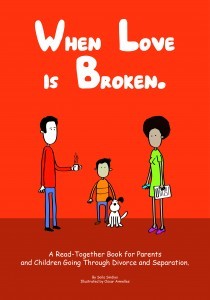
She is known for taking away the pain of trauma and loss in children, adolescents and their families and is the author of “When Love is Broken. A read-together book for children and parents going through divorce and separation.

Soila holds an MSc in Psychoanalytic Developmental Psychology from UCL (University College London), is an accredited Positive Parenting Program (Triple P) practitioner and a trained Family Mediator.

Soila is Graduate Member of the British Psychological Society.

You can contact her on 07850 85 60 66 or via email soila@thedivorcemagazine.co.uk 


High Conflict Divorce – How to Protect your Children

Children of divorce
Soila Sindiyo
 Founder of The Divorce Magazine and Child Trauma Therapist

I think most of us will agree that conflict, arguments, disagreements or whatever you want to call them, are indeed part of “normal” life in a home, however, conflict becomes an issue when children are exposed to it on a regular basis and where it involves both verbal abuse and physical violence.

One line I always recall hearing during my training in working with children of trauma is:

A child old enough to laugh, is old enough to experience trauma.

So for those parents who think a child is too young to understand what is happening you maybe seeking to protect yourselves, rather than the child.

Is it possible that it’s easier to think this way than actually deal with the issues at hand?

Keep in mind two things:

  • You are not your child’s only influence so you’d better be the best
  • A child who is exposed to violence changes who they are

If you’re engaged in a high conflict divorce then here are some things you could do in the hope of protecting your children:

  •  Only communicate through a third party if necessary.  One lady I heard off, got someone to read through emails from her ex.  This reader person would then relate back to her what had been requested in his mail omitting any unnecessary points that had been raised only for point scoring purposes.
  • There are, fortunately, a million ways to communicate nowadays, email, text, whatsapp, mediation, solicitors (andeffects of divorce on childrenno they are not all bad), letters and the list continues.  If you don’t want to see one another, you really don’t have to.
  • Just don’t slag your ex in front of the children, totally unnecessary.  No one gains, not even you. The children might listen to you now and agree with you but in later years, it will come back to haunt you.  Trust me.
  • Get a mutual/public place to meet for the transitions between homes.  If the children are old enough, school’s always a good place.
  • Get you own adult sounding board.  Your children don’t need to hear, know or be part of your arguments.
  • Don’t involve your children in adult issues.  You know what those issues are but your children don’t need to.  Protect their innocence as much and for as long as you can.

If in doubt do speak with someone, your children will be very grateful for that, if not now, later.


Soila is the founder of The Divorce Magazine and creator of the online course – Helping Children Cope with Divorce

She is known for taking away the pain of trauma and loss in children, adolescents and their families and is the author of “When Love is Broken. A read-together book for children and parents going through divorce and separation.

Soila holds an MSc in Psychoanalytic Developmental Psychology from UCL (University College London), is an accredited Positive Parenting Program (Triple P) practitioner and a trained Family Mediator

fathers are important too

Fathers are Important too!

Soila Sindiyo Parenting Therapist Founding Editor The Divorce Magazine
Soila Sindiyo
Parenting Therapist
Founding Editor
The Divorce Magazine

I have been wondering what to write now that father’s day is soon upon us here in the UK – a tricky time for divorced parents.

I wanted to write something that kindly said, “Helping children cope with divorce means giving them the gift of you two getting on as much as possible.”

I wanted to write something that pleaded, “Please don’t interrupt the relationship between your child and his/her father,” it’s not yours to disrupt because you no longer get on.

I am not talking about those father’s who have been abusive to their children because it is true, better to have no father (or mother for that matter) than an abusive one.

I wanted to write something that will put across some research that has been conducted over the years regarding children and their fathers and just how important they are to your child’s social, mental and emotional development.

I wanted to write something that will talk directly to the fathers and say, “Please don’t lose touch with your children.  They need you so much. They need you now more than ever because the world as they knew it has changed since the divorce or separation. By keeping in touch you are helping children cope with divorce in a way no one else can but you.”

Fight for them and keep fighting because they need you.  Don’t let your child become part of the statistics of children whose fathers disappeared following divorce or separation.

Finally, I wanted to write something that will say, fathers are important too – to their children – so this father’s day, help your child do something special for his/her father. Draw a card, make that phone call, or both, buy him something and have your child give it to him.

If it’s your weekend, your time with the children, how about you just step back, if only for a couple of hours and allow for them to have that day together – for your child’s sake, for your child’s well being.

Fathers are important too – very important indeed.

About Soila

Soila is the founder of The Divorce Magazine and creator of the online course – Helping Children Cope with Divorce

She is known for taking away the pain of trauma and loss in children, adolescents and their families and is the creator of the online course – Parenting after Separation

Soila holds an MSc in Psychoanalytic Developmental Psychology from UCL (University College London), is an accredited Positive Parenting Program (Triple P) practitioner and a trained Family Mediator.

Soila is Graduate Member of the British Psychological Society.

You can contact her on 07850 85 60 66 or via email soila@thedivorcemagazine.co.uk 

raising children of divorce

Raising Children of Divorce Part 1- Adult Matters

Soila Sindiyo Parenting Therapist Founding Editor  The Divorce Magazine
Soila Sindiyo
Parenting Therapist
Founding Editor
The Divorce Magazine

There are loads of things children of divorce need and don’t need when going through divorce but I’ll name just three of the main ones in this post.

If parents are able to follow just these three then it’s very likely that all else will fall into place and hence any chances of long or short term negative effects of divorce on children maybe reduced.

They are not easy to follow and neither is raising children while going through the divorce process but we need to do what we can to make sure that our children’s divorce experience isn’t one that will stay with them for the rest of their lives.

This experience can be one that they are able to live through and remember it as something that happened not as something that is still going on in their adult lives.

When raising children of divorce they need to be excluded from all adult matters.  A dear friend of mine who works as a nurse in a primary school sees, first hand, the effects of divorce on children both in their behaviour and academic performance.

She has told the story of a boy who once spent most of the day in her office in tears and in self-isolation, as he waited to hear from his parents as to whether he was going to live with his mother or father.

He was only 7 years old and knew the ins and outs of the divorce process and all of the legal goings on between the parents.

Another mum explained how she was surprised when her daughter asked if “daddy had paid the money,” because she wanted to know if she will then be able to see him.

She hadn’t realised that her daughter was indeed paying great attention each time she said to her that daddy wasn’t paying her any money and so he didn’t deserve to spend time with her.

There are things that children don’t need to know.  They don’t need to be involved in adult matters.  Children of divorce need to be left to continue being children, as much as possible.  And only you as the parents can do this for them.

You are your child’s trustee and that responsibility goes a long, long way including when you are filled with resentment towards the other parent – that’s when your parenting capablities are truly tested.  Will you make the grade or are you the toxic parent?

The best gift you can give your child during and after the filing for divorce and the divorce process is over, is to get on with their other parent, for your child’s sake.

If you’re finding it hard to do, seek help, create a support system around you that can hold you up when things get rough.  It’s probably going to be a long, hard slog but I promise you,for your child’s sake, it will be worth it.

Soila


Part 2 – click here and Part 3 here 

Children of divorce
Get your copy of “When Love is Broken – A read-together Book for Parents and Children going through Divorce and Separation.”

Soila is the founder of The Divorce Magazine and creator of the online course – Helping Children Cope with Divorce

She is known for taking away the pain of trauma and loss in children, adolescents and their families and is the author of “When Love is Broken. A read-together book for children and parents going through divorce and separation.

Soila holds an MSc in Psychoanalytic Developmental Psychology from UCL (University College London), is an accredited Positive Parenting Program (Triple P) practitioner and a trained Family Mediator.

Soila is Graduate Member of the British Psychological Society.

You can contact her on 07850 85 60 66 or via email soila@thedivorcemagazine.co.uk 

Children of divorce

Raising Children of Divorce Part 2- Conflict Free Environment

Children of divorce
Soila Sindiyo
Child Trauma Therapist and Founder of The Divorce Magazine

For part 1 (Raising Children of divorce – The need to be excluded from adult matters) and part 3 (Raising Children of divorce – The need both parents).

This is part 2 Raising Children of Divorce – Conflict Free Environment – where we talk about providing children of divorce with a conflict free environment.

Let’s keep it real though.  Even in “happy” homes there will be moments and times where disagreements will happen.  There will be occasions where parents will get into a proper heated argument that the children will not like hearing.  It happens.

Let’s also remember that if there was no conflict, however subtle or understated, then you most likely may still be together.

So conflict is indeed expected at some level but three things will determine just what effect it will have on your children – the frequency of the conflict, it’s intensity as well as how it’s resolved, I’m not talking resolved with the other parent in conflict but how it’s resolved with the children or in their eyes.

The first two points are self-explanatory I would assume, but let me explain the third.

Providing your child with an opportunity to talk about what happened between daddy and mummy equates with providing them with a chance to package their anxieties and worries and hand them over to someone else to deal with.  This then allows them to carry on, as best as possible, with their lives and feel that they are being taken care off.

If you are not able to carry their emotions then find someone who will; a family member, a friend of yours or a professional.  But do, do something for them.

If they are unable to talk or discuss what is going on or what happened, then being left with all the ensuing emotions, thoughts and beliefs inside them will only aid in enhancing their insecurities, sense of fear of it happening again.  They don’t have the maturity to manage a pack of negative emotions.  You do.

The best gift you can give your child during and after the filing for divorce and the divorce process is over, is to get on with their other parent, for your child’s sake.

If you’re finding it hard to do, seek help, create a support system around you that can hold you up when things get rough.  It’s probably going to be a long, hard slog but I promise you,for your child’s sake, it will be worth it.

Soila


Raising Children of divorce
Get your copy of “When Love is Broken – A read-together Book for Parents and Children going through Divorce and Separation.”

Soila is the founder of The Divorce Magazine and creator of the online course – Helping Children Cope with Divorce

She is known for taking away the pain of trauma and loss in children, adolescents and their families and is the author of “When Love is Broken. A read-together book for children and parents going through divorce and separation.

Soila holds an MSc in Psychoanalytic Developmental Psychology from UCL (University College London), is an accredited Positive Parenting Program (Triple P) practitioner and a trained Family Mediator.

Soila is Graduate Member of the British Psychological Society.

You can contact her on 07850 85 60 66 or via email soila@thedivorcemagazine.co.uk 

Raising children of divorce

Raising Children of Divorce Part 3

Children of divorce
Soila Sindiyo
Child Trauma Therapist and Founder of The Divorce Magazine

This is the final part of a three part post.  Click here for part 1 (Raising Children of Divorce – Need to be excluded from divorce matters) and Part 2 (Children of divorce need a conflict free environment).

Finally, children of divorce need both parents, unless of course there are real issues around their safety and wellbeing, in which case, using a contact centre may be the best way forward.

The love that a child has for a parent, is truly inexplicable.  I say this because it was something that I saw over and over again when I worked as a child trauma therapist at Vicitm Support Lambeth.

There were children who came into my session room whose fathers or mothers had commited really horrific crimes against someone else or them directly but they, these children, in the safety of the therapy room, would say that they missed the parent, still loved them and wanted to see them.

They wouldn’t however say this to the other parent as they didn’t want to hurt them.  They would at times also say terrible things about the other parent to the resident parent, so as to show that they were on their side – just as children of divorce tend to do when their loyalties are split.

Young children don’t understand that their father or mother is a narcissit, not at first anyway, that will come with age, but you do and you can learn what to do when divorcing a narcissit or a sociopath.

So with this in mind, try and imagine, removing the other parent from your child’s life because you are angry, resentful and just feeling vindictive. How is your child supposed to deal with this change in circumstance or this internal vacant space left in their lives?

How are they supposed to go from loving daddy, (generally speaking) and seeing him everyday or every week to not seeing him at all?  Are you, as the mother, aware of what the repercussions of your act will be in your child’s life?  Do you truly understand the role a father plays in a child’s life?

When they turn around in later life and ask you, “Why did you keep me away from my mum/dad?” I wonder what the answer will be?

The best gift you can give your child during and after the filing for divorce and the divorce process is over, is to get on with their other parent, for your child’s sake.

If you’re finding it hard to do, seek help, create a support system around you that can hold you up when things get rough.  It’s probably going to be a long, hard slog but I promise you, for your child’s sake, it will be worth it.

Soila

Soila is the founder of The Divorce Magazine and creator of the online course – Helping Children Cope with Divorce

She is known for taking away the pain of trauma and loss in children, adolescents and their families.

Soila holds an MSc in Psychoanalytic Developmental Psychology from UCL (University College London), is an accredited Positive Parenting Program (Triple P) practitioner and a trained Family Mediator.

Soila is Graduate Member of the British Psychological Society.

You can contact her on 07850 85 60 66 or via email soila@thedivorcemagazine.co.uk 

Please go to your post editor > Post Settings > Post Formats tab below your editor to enter video URL.
/

Pensions and Divorce

Soila from The Divorce Magazine had the opportunity to interview Karen Agnew-Griffith of Woolley & Co. Solicitors about Divorce, Pensions and Financial Settlement or the Financial Order.

How important has the pension become in today’s divorce cases in view of the Wyatt vs Vince divorce court case?

Karen gave us a quick summary of the proceedings in the Wyatt vs Vince case.  She explained that they were married but it wasn’t a long marriage and they had one child.  They divorced in the early 90s and at the time of divorce they had no assests at all.

They separated, he went and she stayed at home living in quite poor circumstances, raising the child without any financial support from him.

20 + years later, he has made a fortune in wind farms and is now a mulitmillionaire.  She on the other hand, is still living in very poor circumstances and as she has raised the child of the marriage without financial support and is saying she now needs help.

At the time of their divorce those many years ago there was no financial settlement of any description.

The courts have now agreed in fact that she is owed but nothing like the amount that she’s expecting.

So what does it means now for couples getting divorced today or those who got divorced a few years ago and had no financial settlement?

Karen explains that the situation hasn’t changed drastically in as much as family lawyers, divorce courts and judges have always said to clients that they should try to resolve financial order settlements and claims at the time of their divorce process.

Karen has had situations where financial order claims have been made so many years after a divorce involving multiples of millions. So there’s always been that situation there.

What’s remarkable about this case is that it wasn’t a long marriage at the time of the divorce there were no assests and this is many, many years later. But Karen thinks this case is going to be treated in the same way as any other.

The facts of the case are always unique and the uniqueness of this particular situation is his remarkable wealth, her remarkable poverty and the fact that she did make a contribution something the has been taken into account.  She made a contribution in raising that child without financial support from the father.

What does “make a contribution” actually entail?  What does it mean?

Pensions and Divorce
Pensions or Property?

It can be anything, Karen explains that she had a case whereby a mother lived in a property that was in joint names.  Husband left that property, never paid for its upkeep, never paid anything towards the mortgage and 20 years later has come back saying, “Well I know you paid the mortgage off now I’d like to sell.”

The husband’s view then was, it’s the wife’s payment of the mortgage during that 20 years, it was the wife’s contribution in maintaining the property that has meant the property is now availalbe to be sold.

So in that particular case what the judge did was that he asked us to secure a valuation to what the property would have been worth at the date of separation and gave the wife all of the growth on the property up to that point and half of the value of the property at the point of separation.

So contribution can be something like looking after a property or where a parent who is looking after the children post-separation while the other parent who is not looking after the children day-to-day is able to work perhaps full-time and pursue a career.

In the meantime, the other parent with the care of the children, looking after the child in school holidays, looking after the children when they’re sick, perhaps cannot pursue a career and is left with a more lowly paid less of a career opportunity type situation.

So, the parent who is looking after the children is making a contrtibution in that way and quite often in a divorce you will quantify what total assets are and you will give the parent with the children whether it’s husband or wife you will give them an extra few percentage of the total assets.

When it comes to divorce and pensions, divorce hasn’t changed and pensions haven’t changed either. They’ve always been very valuable before the 2000s and since it’s just that peope are now aware.

People are living longer, they are suddenly aware that they are going to have a poor retirement if they havent’ got a decent pension fund. The value of the state pension has fallen. We’ve had a lot of years of opting out so that there’s less additoinal state pension and people generally have been untrusting of pensions and have invested less in pension pots you know in the last 15 years.

We have the situation whereby government workers, civil servants, nurses, doctors, teachers, members of the armed forces, police officers, firefighters, they’ve all had defined benefits final salary schemes and those are worth vast sums often vastly more than the value of any home that the parties own. So and wives are beginning to understand that they are certainly going to live as long as their husbands possibly longer and they need that retirement. They need those funds.

So when it comes to divorce and pensions and property, I asked Karen, pension or property?

She explained that one the court would say, the property, the money in the property is what we call a liquid asset you could sell it go out and buy lots of sweets.

With the pension, up until the recent changes, it was very difficult to cash it in and it was regarded as an illiquid asset.

The recent changes means that there is more liquidity in a pension. Realistically you’re only going to take £30,000 because after that the tax you would pay is punitive. So there’s a little bit more liquidity in a pension, but no frankly you need both. Buy a smaller house and have a pension.

What role does the financial order have to play in a divorce process and divorce settlement?

What is more important, having the matrimonial home or a share in the pension (pension sharing in divorce).

When coping with divorce and looking at divorce settlements, what do both partners need to be aware off with regards to pensions especially if you’re a teacher, firefighter, police officer etc. How would the pension sharing be an important factor in your divorce?

How important is it to reach a financial order?

As you go through your divorce process, don’t forget about completing all your divorce papers including those that deal with your financial settlement or financial order.

Ask divorce lawyers about the financial order and how to go about it all.

How will your divorce affect your pension? Is pension sharing a must do?

If you would like to contact Karen – 01842779905 –  www.family-lawfirm.co.uk

dealing with divorce emotions

Dealing with Divorce Emotions whilst Looking after your Children

Soila Sindiyo Child Trauma Therapist and Founder of The Divorce Magazine
Soila Sindiyo
Child Trauma Therapist and Founder of The Divorce Magazine

Break ups are hard enough on us adults without children being involved while dealing with divorce emotions.

I have heard people say that they try and continue as though nothing has happened when the other spouse leaves the home.

But the one thing that I tell parents is not to pretend that everything is ok or that the relationship break-up is not serious as it seems.

It is serious and this moment in time, the breakup of the family unit, will always be a watershed moment in your child’s life, no matter what the reasons for divorce are.  So it’s vital that your child is provided with a safe and secure environment in which he can have a voice and be heard.

In the meantime, you as the parent are left with not only coping with divorce and all the emotions that that brings up in you but you are also expected to continue being that good, attentive and caring parent while inside you feel anything but.

You begin to worry about the effects of divorce on children while dealing with the whole divorce process or divorce procedure.  You have divorce papers to complete and submit while trying to deal with issues around your child’s wellbeing and welfare.

And when you get something “wrong”, as divorced parents often do because after all we are still human, you sit and wonder if this “mistake” will be that long-term effect of divorce on children you so often hear about.

I say, don’t be afraid of making mistakes.  You can try but If you feel upset and weepy, it is ok to let your children know and to let them see you upset.

Yes it is.  Why?  Because then you are telling them that it is ok for them too to be upset.  It is ok to feel bad about what is going on and not only show it but also talk about it.

By seeing you cry one minute and then getting on with what you have to the next, sends them the message that it is possible to feel upset, really upset at times because it will pass and life goes on because emotions are normal and they can be handle.

What is not ok though is to talk to children about what your ex partner has done to you. Don’t, in a fit of anger, slag off their father or mother no matter what.  It is not fair on them at all because after all he is still their father or she is still their mother.  No matter what.

If you are concerned about your little ones, do contact me.


Soila is the founder of The Divorce Magazine and creator of the online course – Helping Children Cope with Divorce

She is known for taking away the pain of trauma and loss in children, adolescents and their families and is the author of “When Love is Broken. A read-together book for children and parents going through divorce and separation.

Soila holds an MSc in Psychoanalytic Developmental Psychology from UCL (University College London), is an accredited Positive Parenting Program (Triple P) practitioner and a trained Family Mediator.

Soila is Graduate Member of the British Psychological Society.

You can contact her on 07850 85 60 66 or via email soila@thedivorcemagazine.co.uk 

why forgive and forget

Why Forgive and Forget?

Soila Sindiyo Child Trauma Therapist and Founder of The Divorce Magazine
Soila Sindiyo
Child Trauma Therapist and Founder of The Divorce Magazine

Ok.  If you’re reading this then chances are that you are angry with someone somewhere on this mother earth planet of ours more specifically, your ex.

And maybe it’s not just your ex, there could be his/her family and friends too.  I once knew a man who was not only angry with his ex but his children too.  So irate he was with them that he swore never to speak with them again!

Now take a couple of minutes and just ask yourself, now that I have this anger and resentment in me towards this person, what is it doing to me?  How am I gaining from it?

And even more importantly, how is it hurting that person right now or ever?  Do they care that I have not forgiven them, that I am burning with anger towards them?  Or are they expecting it?

Now take another couple of minutes and ask yourself – “If I were to forgive them what would happen?”  “How would I feel?”  “How would it affect them?”

Very often we think that if we forgive then  the “perpetrator” or the person that has caused you offence then he/she has gotten away with whatever it is that they did to you.

We have sooooo often heard, “I can forgive but I won’t forget.”  But those are just words strung together to make a kind of pretty sentence – they doesn’t mean much.

But the question is “do you have emotional closure?”

And when you do remember whatever it is that the person did to you, because you will, how do you feel?  Does anger still rise up in you?  Most likely.  If so, do you still think you have forgiven?

Right now, you are probably thinking that you are justified to hate that ex spouse or partner.  And you probably are – but for how long?

And who is the hate, anger and resentment affecting?  Does the other person lose ANY sleep knowing that you hate them and the you will not forgive them.  I don’t think so.  They most likely don’t care at all – to put it mildly.

Truth is hate, anger and resentment, change you. They change who you are.

They change your heart and your mind to such an extent that if you stepped out and looked at yourself from another angle, you might not recognise yourself or the person that you have become.

why forgive and forgetNow why would you think that hate, anger and resentment wouldn’t affect your physically let alone emotionally?

When you harbour anger, hatred and resentment, your body’s chemical balance is dramatically disrupted.  Your “flight or fight” responses stay aroused twenty-four hours a day, seven days a week.  That means that hatred, anger and resentment are absolutely incompatible with your peace, joy and relaxation.” Dr Phil

Apart from these emotions affecting you physically, emotionally and mentally then keep in mind, if you can, that because you are full of these negative and toxic emotions, then your behaviour will be affected so anyone you meet from here on, meets the angry, resentful person.

You can mask it all as much as you please but it will still come through in your actions and words, however subtle.

Ok, if you don’t believe me, how can you really truly give what you don’t have?  If someone you really cared about came over to you and asked, “Gosh I need a holiday.  Would you book one full-paid for me please?”  Most likely not, not because you don’t want to necessarily but because you don’t have the money to do it.

So, do think about it.  Why forgive and forget? Because by doing so you give yourself a new path to follow when you let go off the resentment, anger and hate.  Stop holding yourself hostage to the past by starting to forgive.

It is easier to start forgiving what happens today than what happened yesterday or a few years ago.

If someone cuts in front of you at the lights or something, let it go.  Tell him or her to go have their accident elsewhere.

Start forgiving what happens today, this very moment and what happened yesterday will start falling away too.

Warm hugs,

Soila


Soila is the founder of The Divorce Magazine and creator of the online course – Helping Children Cope with Divorce

She is known for taking away the pain of trauma and loss in children, adolescents and their families and is the author of “When Love is Broken. A read-together book for children and parents going through divorce and separation.

Soila holds an MSc in Psychoanalytic Developmental Psychology from UCL (University College London), is an accredited Positive Parenting Program (Triple P) practitioner and a trained Family Mediator.

Soila is Graduate Member of the British Psychological Society.

You can contact her on 07850 85 60 66 or via email soila@thedivorcemagazine.co.uk 

/

Absent Fathers Lost Sons

Soila Sindiyo
Accredited Parenting Practitioner
Founding Editor
The Divorce Magazine

In my previous article, I wrote about divorced fathers and their children.

I put across some really important research that helps you know and understand just how vital your presence, as a father is, in your child’s life now and way into the future.

I am writing this new post after watching an episode of Dr Phil in which he is dealing with a family where dad is…not being very nice to put it extremely mildly.

Dad, in this episode seems to be completely oblivious to what the role of a father truly entails.

His behaviour, words and actions are absolutely destroying his children and the sad thing is he doesn’t seem to see it.  He just doesn’t seem to know or realise what he is doing to his children.

In this episode, Dr Phil has invited Dr Zimbardo, a well known and very, very experienced psychologist and author of The Demise of Guys, onto the show and after listening and watching for a while this is what Dr Zimbardo had to say about our young men and boys following his research findings.

Very scary…

“One of the things we have discovered is that boys are failing. Boys are really dropping out of life. They are failing academically, socially and when they get to be men, they are failing sexually. And we have identified some of the reasons, some of the culprits:

  •  It’s excessive isolation of playing of video games. They become addictive.
  • It’s excessive isolation watching pornography online which is addictive 
  • The absence of fathers.
absent fathers
40 – 50% of all boys in America are growing up without a father

40 – 50% of all boys in America are growing up without a father, from divorce, from separation, from father’s being absent and boys need fathers more than girls need fathers. Girls get what they would need from mothers.

Boys need guidance, they need boundaries, they need motivation, they need role models…

To have an abusive father is worse than having no father.

To make somebody feel that he is worthless, to undercut his sense of mastery, of course he’s going to fail. You never, every undercut their sense of self-esteem…because what you’re doing is destructive. You are harming them psychologically and even physically.”

So if you make up part of the absent fathers statistics or an abusive one then know what it is that you are doing to your children.  You’re not just hurting them now, in this present moment, you are harming for them for life.  You are changing who they are and getting them to be who they shouldn’t be.

You can change that.  It’s never too late to repair the damage caused.  Start with the small things.  Become aware of how destructive your words and actions are and don’t feel too big to apologise and make it right.

Admitting that you didn’t do the right thing by your child or children is one of the first and most important steps you can take in this healing journey.

You, as the father may have had an abusive relationship with your own father or grew up as one of the many children who live experienced absent fathers lives.

You may have been a victim of hurtful and soul destroying words and actions and it’s true what they say, you cannot give what you don’t have.  But once you know that this had been your own journey, is it not time to fix it?

As Dr Phil puts it in the show:

“We have an old saying in Texas that sometimes you have to rise above your raising.

You maybe raised by people that aren’t doing a very good job but there’s a point in which you’ve got to rise above your raising. You’ve got to say, “you know what, that’s just something I’ve got to do.” That’s just something I’ve got to do on my own.

Sometimes, the sad fact is that we have to give ourselves what we wish we could get from somebody else.

And you may have assumed some kind of a role and you can sit around and say, “Well the guy that could have picked and lifted me up didn’t,” and I’m sorry that that’s your experience of him. But you are firstly approaching adulthood and you’ve got to give yourself permission to believe in who you are because the more you know who you are, the less vulnerable you are to what other people tell you who you are.”

So yes, know, accept and realise that that has been your journey into manhood.  Rise above it and get to know you who you are, who you truly are.

Do you?

About Soila

Soila is the founder of The Divorce Magazine and creator of the online course – Helping Children Cope with Divorce

She is known for taking away the pain of trauma and loss in children, adolescents and their families.

Soila holds an MSc in Psychoanalytic Developmental Psychology from UCL (University College London), is an accredited Positive Parenting Program (Triple P) practitioner and a trained Family Mediator.

Soila is Graduate Member of the British Psychological Society.

You can contact her on 07850 85 60 66 or via email soila@thedivorcemagazine.co.uk 


Co-parenting and Life after Divorce

Co-parenting and Life after Divorce – It’s Really not about you

Soila Sindiyo
Soila Sindiyo
Child Development Psychologist
Founder of The Divorce Magazine

There are so many stories from adult children of divorce who remember their parents’ divorce like it was yesterday.

Some talk about being let down over and over again by their fathers who would fail to turn up for scheduled visits.

Others will tell you about how their mothers brainwashed them into hating their other parent to the point where the false beliefs they held not only affected their spent time with their father but also took years to dispel.

You will find situations where the child’s life after divorce is indeed no better than when he lived with combative parents, the only difference now, is that she can sleep knowing that there will be no shouting matches to wake up to.  But every exchange time is almost a guarantee that an argument will erupt.

This then means that although your child is looking forward to seeing the other parent, the experience that precedes this union, is fraught with anxiety, fear and dread, emotions that can take a toll on your child over a period of time if persistently experienced.

It’s great when parents create a parenting plan that works for them and their little ones.  But, unfortunately, there are so many parents who believe that the creation of such a plan is enough to provide a secure and comfortable life for their children.

I wish it was but it isn’t enough.  The co-parenting plan is certainly a first step but in order for this to work successfully you have to continuously keep in mind that this plan is, first and foremost, for your child’s welfare and wellbeing.  It’s not about you.

All co-parenting arrangements are or should be about your children.

Co-parenting after divorce or separation needn’t be hell. No. It may not be easy but it needn’t be so.

If for one second you imagine the scenario from your child’s perspective, just take a moment and imagine what he is seeing and hearing, then you will learn just how terribly upsetting it is to hear the exchange of words, the doors slamming, the shouting, the name-calling etc.

co parenting
Just keep your child in mind no matter what.

If you, as the parent and adult, find yourself getting angry and emotional think what it might be doing to your child; same emotion, little body that doesn’t even have the maturity of managing difficult feelings and thoughts.

Children of divorced parents already have plenty to cope with, plenty to adjust to and at times plenty of emotions without the added anxiety gifted by their parents.

You are supposed to take that anxiety and fear away.  Not add to it.

You are supposed to help reconstruct the world for her. Not continue to disassemble it.

Co-parenting is such a wonderful thing. It is the best thing you can do for all children of divorce.  It’s shouldn’t be about point scoring. You can do that in other ways, in your own time and making yourself miserable if you must, without using your child as ammunition or holding him hostage.

When you arrive late to pick your daughter up or not turn up at all, what do you imagine she feels?  Surely she must feel something.  What do you think that is? If this happens over and over again, what do you imagine is going on for her?  What feelings or messages is she getting about how you feel about her?  Who do you imagine is hurting?  Why would you want to put her through that?  What’s so important that you decided not to turn up…again?  You?

When you take your son back at 8 o’clock on Sunday evening without having had any dinner and in dirty clothes, what do you think is going on in his mind?  He has been here before.

He knows mum is going to get angry and dad defensive.  Why? Because it’s Sunday evening, he has school tomorrow, but he will be going to bed at 9 or later after he has had a shower and dinner, preparation that you could have done for your child’s sake before taking him back home to start the week.

You’re child is not your priority at that time, you are.

Keep in mind that there is a physical reaction to every emotion and in a situation such as this, the physical reaction is not a positive one and you are the cause.

Joint custody can be hard. It can be extremely challenging especially where you are unfortunate enough to be co-parenting with a narcissist.

What I say to this is do your bit. Play your role as the supportive parent that you want to be. Have a support system where you can take your emotions, thoughts, anxieties and fears.

Just keep your child in mind no matter what. Create your own parenting plan that works for your family. Your child really has no one else.

Your marriage might be over yes, but your family isn’t. It has transformed, changed and it’s time to adjust to that and play along nicely.

About Soila

Soila is the founder of The Divorce Magazine and Parenting Lives

She is known for taking away the pain of trauma and loss in children, adolescents and their families and the creator of the 4.6 rated online course Parenting after Separation

Soila holds an MSc in Psychoanalytic Developmental Psychology from UCL (University College London), is an accredited Positive Parenting Program (Triple P) practitioner and a trained Family Mediator.

Soila is Graduate Member of the British Psychological Society.

You can contact her on 07850 85 60 66 or via email soila@thedivorcemagazine.co.uk 


divorced dads and their children

Divorced Dads and their Children

Soila Sindiyo Child Trauma Therapist and Founder of The Divorce Magazine
Soila Sindiyo
Child Trauma Therapist and Founder of The Divorce Magazine

I write this post a bit annoyed following an experience this week, where a certain person is denying the father of her daughter any type of contact because she felt that she, the daughter aged 5, needed time to get used to the divorce??

This is a statement that she kept repeating which frankly doesn’t make any sense because by keeping her away from her father, not only is she suffering yet another sudden loss in her life (aside from the break-up of her family) but another shock will be awaiting her when daddy, is then “reintroduced” in her life at a later stage.

Backstory: Dad left them, not for another woman, but he felt because he needed to.

It remains quite obvious that this lady was now parenting from hurt, anger and vengeance than from anywhere that would mean putting her daughter’s wellbeing first.

I’m annoyed that in this day and age, there are still children out there that have to watch helplessly as their relationship with their father is disrupted, interfered with or even permanently severed just because someone is angry, resentful and vengeful.

Yes, I know there are situations and circumstances where it’s better for a child not to be with his/her father just as there are situations and circumstances where a mother shouldn’t be in the children’s lives.

These are not the cases I am talking about here when I speak of divorced dads and their children.

The ones I’m talking about are those where choices are made by some parents to dismiss or interrupt the father-child relationship, with no real or valid reason except because the divorce has been acrimonious and emotions are running very high.

Divorce is not a license to destroy a relationship. Your ex-partner didn’t turn into a monster of a father within 24 hours.

That your ex-partner, the mother of your children, is giving you hell each time you go round to see or pick up the children is not a good enough reason to stop seeing them just to keep the peace. Whose peace are you keeping? And while you’re keeping it, what happens to your children now and in the future? It doesn’t have to be this way, there are ways and means around this.

That you live in a far away country doesn’t mean that you don’t keep up good, in fact very good, communication with your children. Not with the likes of skype, viber and whatsapp – all free – to help you along the way. Of course it’s not the best way but if it’s the only way then why not use it as much as possible?

Denying your child their father or removing yourself from their lives is like slowly, gradually wiping away their opportunities to better chances in life.

When it comes to Divorced Dads and their Children did you know:

• In a longitudinal study, Flouri and Buchanan (2002-2004), found that a father’s involvement with his child before the age of seven was linked to a good parent-child relationship in both adolescence and into adulthood.

divorced dads and their children• Children who had a good relationship with their father were less likely to get into trouble with the police (same study).

• Children whose fathers were involved in their upbringing had a better chance of attaining higher educational qualifications than those who didn’t (same study)

• Another two-year study by J. Dunn et al., concluded that:”More frequent and more regular contact (which included communication by telephone) was associated with closer, more intense relationships with non-resident fathers (relationships that were both more positive and more conflicted), and fewer adjustment problems in the children.”

• Wallerstein et al. (2002) found that those children who’s fathers were involved tended to make faster progress in their cognitive and social development as they went about exploring the world together

• 5 year old children, followed over a 25 year period, who were closely involved with their fathers were found to be more “empathic as adults and were happier as husbands and as parents than those who had not experienced close relationships with their own fathers a quarter of a century earlier – M. E. Lamb (ed.) (1997) and in K. Pruett(2000)

• Daughters who, over several years, managed to have a good and loving relationship with their husbands, came from homes where they had a “healthy, loving relationship with their fathers as children” – J. S Wallerstein and S. Blakeslee (1995)

So as you go about your divorce and separation, as you go about creating your co-parenting plan, don’t do what has been done so many times before and still continues; don’t overlook or underestimate those afternoons spent in the park with daddy and those days spent just talking, playing and walking because it is these moments that will have a positive influence on your child in so many ways today and in his or her future life.

If you’re struggling with creating a parenting plan, do get in touch.


Soila is the founder of The Divorce Magazine and creator of the online course – Helping Children Cope with Divorce

She is known for taking away the pain of trauma and loss in children, adolescents and their families and is the author of “When Love is Broken. A read-together book for children and parents going through divorce and separation.

Soila holds an MSc in Psychoanalytic Developmental Psychology from UCL (University College London), is an accredited Positive Parenting Program (Triple P) practitioner and a trained Family Mediator.

Soila is Graduate Member of the British Psychological Society.

You can contact her on 07850 85 60 66 or via email soila@thedivorcemagazine.co.uk 

1 3 4 5 6 7 8